Certified Arborist Consultation for Tree Risk and Maintenance Plans
Trees add scale, shade, privacy, and character to a property, but they also carry weight, literally and financially. A mature limb over a driveway, a codominant stem above a roofline, or a declining tree near a play area changes the conversation from appearance to risk. That is where a Certified Arborist Consultation becomes valuable. It gives property owners something more useful than a quick opinion or a rough quote. It provides a structured way to look at tree condition, likely failure points, site targets, and the maintenance options that can reduce risk without jumping straight to removal.
That distinction matters. Not every tree with deadwood needs to come down. Not every lean is a defect. Not every crack can be managed. Sound tree care depends on judgment, and judgment is exactly what a trained arborist is there to apply.
The best consultations do two jobs at once. First, they assess whether a tree presents a meaningful concern now or in the near future. Second, they turn that assessment into a realistic maintenance plan, one that fits the tree, the site, the budget, and the owner’s tolerance for risk. For homes, strata properties, commercial sites, and larger landscapes, that process often prevents two common mistakes: ignoring a problem until it becomes urgent, or paying for unnecessary work because the tree simply looks rough from the ground.
What a certified arborist brings to the table
The credential matters because tree work is specialized and inherently hazardous, especially on large trees. Arborists who hold certification have demonstrated knowledge through a comprehensive exam, maintain their credential through continuing education, and are expected to follow a professional code of ethics. That does not mean every certified arborist makes the same recommendation, because tree care is full of judgment calls, but it does mean the consultation is rooted in the art and science of arboriculture rather than guesswork.
That background becomes especially important when the issue is not obvious. A homeowner may notice sparse foliage and assume a tree is dying. A landscape manager may focus on a branch hanging over a parking area and miss the more serious concern at the union where two stems meet. An arborist is trained to look at the whole picture: species response, branch architecture, visible defects, previous pruning cuts, site use, and what could be damaged if a part fails.
A proper risk conversation also starts with a simple truth that many people find surprising. There is no completely safe tree. Some level of risk always exists. The real question is whether that level of risk is acceptable for the site and whether practical steps can reduce it.
Risk assessment is not the same as a quick visual opinion
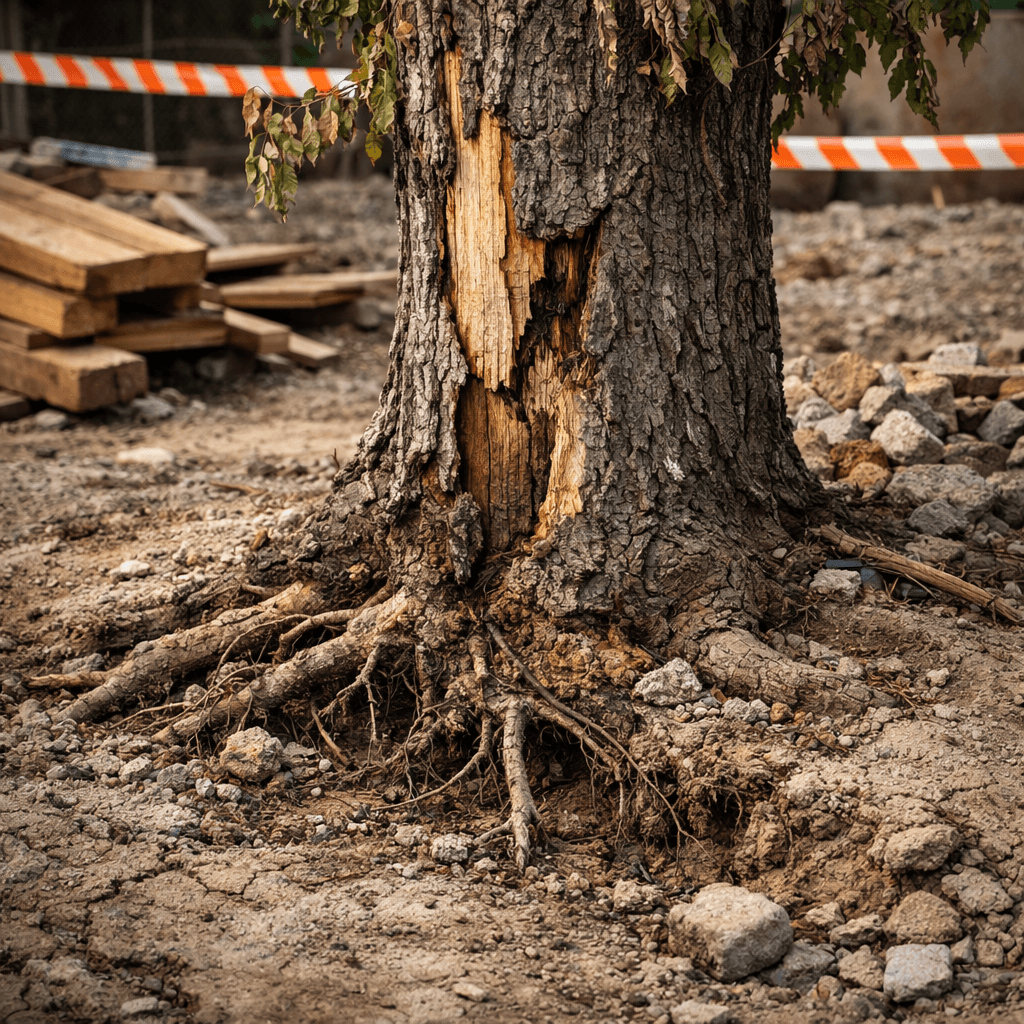
One of the biggest differences between a casual estimate and a professional consultation is method. Tree risk assessment is a systematic process used to identify, analyze, and evaluate risk, then recommend measures that bring it to a more acceptable level. That systematic approach keeps the conversation from drifting into vague statements like “it looks bad” or “it has always been fine.”
In practice, the arborist is weighing several factors at once. Is there a visible defect or condition that suggests likely failure? What part of the tree is involved, a limb, a stem, the root area, or the whole tree? What is the target beneath or beside it, a house, parked cars, utility use area, foot traffic, or open lawn? How often is that target actually occupied? Those questions shape the recommendation more than appearance alone.
Consider two similar trees with comparable deadwood. One is at the edge of a back acreage where people rarely walk. The other overhangs a front entry used every day. The tree condition may be similar, but the risk profile is not. That is why Dangerous Tree Assessment and Removal cannot be reduced to a single rule like “remove anything with dead branches” or “save every mature tree if possible.” The site drives the decision as much as the defect.
What happens during a consultation
A good consultation usually feels more like a site review than a sales pitch. The arborist examines the tree from multiple angles, looks at branch structure and past pruning, and considers nearby targets. If there has been storm damage, they look for fresh failures, hanging limbs, split unions, or changes in canopy balance. If the concern is long term maintenance, they are often assessing whether selective pruning, monitoring, or structural support could improve the situation.
Clients often expect a simple yes or no answer: safe or unsafe, keep or remove. Real tree care is rarely that clean. Many recommendations land in the middle ground. A tree may be retainable with Tree Pruning & Crown Shaping Tree Pruning & Crown Shaping to reduce end weight and remove dead or damaged branches. A weak union may benefit from Tree Cable and Bracing where appropriate as part of a broader management strategy. A declining tree with a high-value target may be a candidate for removal because the consequences of failure are too high. Each of those paths can be reasonable in the right setting.
The consultation also creates a baseline. Even if no immediate work is needed, the owner now has a record of current concerns, likely maintenance priorities, and signs that would justify a follow-up inspection. That kind of planning is useful for property managers who need to budget and for homeowners who want to avoid emergency decisions during the next wind event.
Pruning as risk reduction, not cosmetic overreach
Pruning is one of the most common outcomes of a certified arborist consultation, but the purpose matters. Pruning to reduce risk is not the same as cutting for visual symmetry. It is targeted, limited, and based on tree biology and branch structure. Proper cuts, especially reduction and removal cuts, matter because poor technique can create new problems instead of solving old ones.
This is one reason trained arborists strongly caution against topping, stub cuts, and other improper methods. Topping may seem like a fast way to lower height and make a tree feel safer, but improper pruning can weaken structure and force poor regrowth. The same is true when large branches are cut back arbitrarily rather than reduced correctly to appropriate laterals.
When Tree Pruning & Crown Shaping is part of a maintenance plan, the recommendation should be specific about the goal. The goal might be crown cleaning to remove dead, damaged, or hanging wood. It might be directional pruning to maintain clearance. It might be crown reduction in selected areas to lessen loading on a weak branch or stem. It might also be crown raising where lower limbs conflict with site use. Those are different objectives, and they should not be blended into indiscriminate cutting.
I have seen many clients relax once they understand that a maintenance plan does not mean “take a lot off.” In many cases, the most responsible plan is restrained. A few correct cuts in the right places can do more for risk reduction than a dramatic thinning that leaves the tree stressed and structurally compromised.
When removal is the responsible recommendation
Some trees cannot be managed to an acceptable level of risk. If the arborist sees conditions that point to a serious likelihood of failure, and the target is significant, Tree Removal Services may be the most defensible recommendation. That is not a failure of arboriculture. It is part of arboriculture.
This decision tends to be easier for clients when the reasoning is explained clearly. Removal may be advised because the defect is beyond what pruning can reasonably address. It may be because the tree’s position over a structure or high-use area leaves too little margin for error. It may also follow storm damage where the remaining structure is no longer dependable enough to retain.
Removal planning should also include what comes after. Stump Removal & Grinding often enters the conversation at this stage, not just for appearance but for site use. A client preparing to replant, regrade, or reclaim lawn space may want the stump addressed as part of the overall work plan. In other cases, stump grinding can wait while the owner decides how the area will be used.
What matters during consultation is not upselling every related service. It is understanding sequence. If removal is necessary, does the stump need immediate attention? If it is a commercial site, will access for equipment affect the timing? If the property owner intends to plant again, does that change where grinding makes sense? These are practical details, but they shape whether the plan works smoothly or creates extra cost later.
Structural support and the limits of intervention
Some trees have value that justifies careful mitigation rather than removal. A well-placed specimen tree, a mature tree anchoring a landscape, or a tree with a manageable structural issue may be a candidate for support systems such as Tree Cable and Bracing. Structural support is not a cure-all, and it is not appropriate for every defect, but in selected situations it can be part of a thoughtful plan to lower the likelihood or consequences of failure.
This is where experience counts. Support systems should be considered alongside pruning, not instead of it. If a limb is overextended and heavily loaded, reducing stress through proper pruning may matter as much as the hardware itself. Likewise, support systems do not erase the need for future inspection. Trees change over time. Growth, weather exposure, and previous damage all influence whether a support system remains suitable.
Clients sometimes hear “cabling” and assume the tree has been permanently fixed. That is too simplistic. The better way to think about it is managed retention. The arborist is helping the owner keep a tree with known limitations urgent tree cutting under conditions that are monitored and maintained, rather than pretending the limitation has disappeared.
Emergency response changes the timeline, not the standards
After storms, heavy snow, or sudden branch failure, urgency can push owners toward rushed decisions. Emergency Tree Services exist because some situations cannot wait. A split stem over a driveway, a suspended branch in the canopy, or a damaged tree affecting access needs prompt attention. Even then, the value of certified judgment remains high.
Emergency work still depends on the same fundamentals. What failed, what is likely to fail next, what targets are exposed, and what action will stabilize the site safely? In many cases, the first priority is not complete restoration but hazard reduction. That may mean removing hanging limbs, securing access, or isolating a dangerous tree until full work can be scheduled.
This is also where poor assumptions can become expensive. Property owners sometimes think a storm-damaged tree always needs full removal. Sometimes it does. Other times, a measured response preserves a viable tree through selective pruning and follow-up monitoring. The point of a professional emergency consultation is to avoid making a permanent decision under stress without understanding the actual condition of the tree.
Maintenance plans work best when they are site-specific
A useful tree maintenance plan is never just a menu of services. It should reflect the property’s exposure, use patterns, and tolerance for disruption. A family home with children under a large canopy asks different questions than a vacant lot. A commercial site with regular vehicle traffic has different priorities than a rural shelterbelt. The consultation should account for that.
The strongest plans usually balance several categories of work over time:
- priority risk mitigation for trees or parts with the most immediate concern
- scheduled pruning to maintain structure and clearance
- monitoring for retained trees with known defects or support systems
- removal planning where mitigation is not sufficient
- follow-up after storm events or changing site conditions
That may look straightforward on paper, but the order matters. A tree with a potentially significant defect over a walkway belongs ahead of a low-risk pruning item at the back of the property. A retained tree with cabling should not disappear from the schedule simply because it looks stable this season. Maintenance planning is really about discipline. It keeps owners from spending money only when a tree becomes visibly alarming.
Fire-smart thinking belongs in the conversation where relevant
In regions where wildfire exposure is a real concern, FireSmart Tree Services can become part of the maintenance plan. The key phrase is “where relevant.” Fire-smart work is not a universal prescription for every property, and it should not be treated as a branding term detached from actual site conditions.
Where it does apply, the arborist’s role is to align tree care decisions with broader defensible-space goals while still respecting tree health and structure. That may influence pruning priorities, removal choices, and the way vegetation around structures is managed. The details depend heavily on the property and local conditions, so the consultation should stay grounded in what can be observed and acted on at the site rather than relying on generic advice.
This is a good example of why a one-size-fits-all proposal rarely serves clients well. The same tree can be valued for shade, screened for privacy, questioned for structural weakness, and reviewed for fire exposure, all at once. A maintenance plan has to sort those competing priorities into a coherent recommendation.
Questions worth asking during a consultation
Many owners have lived beside the same trees for years, so they notice subtle changes before anyone else arrives. That local knowledge is useful. The best consultations draw on it. When clients speak up about changes after a storm, a branch that has started sagging, or an area where people now park regularly, the arborist gets better context for the risk picture.
A few questions consistently lead to better decisions:
- What exactly is the target if this tree or part of it fails?
- Is the concern immediate, seasonal, or long term?
- Can pruning or structural support lower the risk enough to retain the tree?
- If removal is recommended, what site impact should be expected?
- What signs should trigger a reinspection before the next scheduled visit?
These questions help clients move beyond “Do I need to cut it down?” and into a more informed discussion about options. They also make it easier to compare proposals. A quote that only names a service is not as useful as one that explains why that service is being recommended.
The difference between maintenance and deferred liability
One pattern shows up repeatedly on both residential and commercial properties: routine tree care gets postponed because the canopy still looks green from a distance. Then a storm exposes weak attachments, deadwood, or damage that had been developing quietly for years. At that point, the owner is no longer choosing among calm, planned options. They are reacting to urgency.
That is the practical case for consulting a certified arborist before there is a visible crisis. Even a limited visual risk assessment can identify priorities that deserve attention now and separate them from issues that can wait. It may confirm that a tree is lower risk than feared. It may support Dangerous Tree Assessment and Removal where conditions justify it. It may lay out a pruning cycle that protects both tree structure and nearby assets. It may recommend Tree Removal Services for one tree, Tree Pruning & Crown Shaping for another, and monitoring for a third. The point is not to generate more work. The point is to match the work to the actual risk.
For owners managing multiple trees, that clarity often pays for itself in avoided surprises. A planned removal is almost always simpler to coordinate than an emergency response. Scheduled pruning is usually easier on access and less disruptive than last-minute hazard work. Even Stump Removal & Grinding tends to go more smoothly when it is part of a planned sequence rather than an afterthought following a failure event.
Why professional judgment matters most in the gray areas
The obvious cases are easy. A fresh split over a front door needs prompt attention. A broken hanging limb after a storm calls for immediate hazard reduction. The difficult cases are the gray ones, trees that still contribute meaningfully to a property but show defects, decline, or structural complexity that should not be ignored.
That is where certified consultation is at its best. It does not promise zero risk, because no honest arborist can. It does something more useful. It applies a systematic risk framework, practical field judgment, and appropriate treatment options to help owners make defensible decisions. Sometimes that leads to preservation with pruning and monitoring. Sometimes it leads to Tree Cable and Bracing as part of a managed retention plan. Sometimes it leads to Emergency Tree Services after a sudden event. And sometimes the right answer is straightforward removal.
A maintenance plan built from that process is not just a work order. It is a strategy for managing living structures that change over time, in places where people live, park, play, and work. That is why a certified arborist consultation remains one of the most valuable starting points in tree care. It turns uncertainty into a plan, and it does so with the seriousness that trees, and the risks around them, deserve.
Name: Ace Tree Services Ltd.
Address: 4656 Wallace Hill Road, Kelowna, BC
Phone: 250-212-9593
Website: https://acetree.ca/
Hours:
Monday: 7:00 AM–5:00 PM
Tuesday: 7:00 AM–5:00 PM
Wednesday: 7:00 AM–5:00 PM
Thursday: 7:00 AM–5:00 PM
Friday: 7:00 AM–5:00 PM
Saturday: 7:00 AM–5:00 PM
Sunday: Closed
Emergency tree services: 24/7 emergency service is listed.
Open-location code / Plus code: RHF8+8G Kelowna, British Columbia, Canada
Map/listing URL: https://www.google.com/maps/place/Ace+Tree+Services+Ltd./@49.8232606,-119.4337283,563m/data=!3m1!1e3!4m6!3m5!1s0x537d8b1d074815c5:0x450b88afa7a41435!8m2!3d49.8232606!4d-119.4337283!16s%2Fg%2F11ydkpnh22
Embed iframe:
Socials: https://www.facebook.com/people/Ace-Tree-Services/61585901931447/
https://m.yelp.com/biz/ace-tree-services-kelowna
Ace Tree Services Ltd. provides professional tree service for residential, commercial, and municipal customers in Kelowna and across the Okanagan Valley.
The company’s listed services include tree removal, stump removal and grinding, tree pruning and crown shaping, emergency tree services, certified arborist consultation, dangerous tree assessment, tree cable and bracing, and wildfire mitigation.
Ace Tree Services works with homeowners, businesses, property managers, and public-sector clients that need safe, practical tree care in the Kelowna area.
The official site highlights ISA-certified arborists, insurance, and experience handling both routine and complex tree service situations.
Customers can contact Ace Tree Services for tree care planning, hazard concerns, emergency tree cleanup, pruning needs, stump grinding, or advice about trees near homes, fences, driveways, and landscaping.
Ace Tree Services lists regular work hours from 7:00 AM to 5:00 PM Monday through Friday, with 24/7 emergency tree service available for urgent situations.
For tree service in Kelowna, call 250-212-9593 or visit https://acetree.ca/
The public map listing places Ace Tree Services Ltd. in Kelowna and can help customers find directions to the Wallace Hill Road area.
Popular Questions About Ace Tree Services Ltd.
What services does Ace Tree Services Ltd. provide?
Ace Tree Services Ltd. provides tree removal, stump removal and grinding, tree pruning and crown shaping, emergency tree services, certified arborist consultation, dangerous tree assessment and removal, tree cable and bracing, and wildfire mitigation.
Where is Ace Tree Services Ltd. located?
The official website lists Ace Tree Services Ltd. at 4656 Wallace Hill Road, Kelowna, BC.
What areas does Ace Tree Services Ltd. serve?
The official website describes Ace Tree Services as located in Kelowna and servicing the Okanagan.
What phone number should customers call?
Customers can call Ace Tree Services Ltd. at 250-212-9593.
What are Ace Tree Services Ltd.’s regular hours?
The official website lists work hours as 7:00 AM to 5:00 PM, Monday through Friday. Saturday and Sunday regular hours are not listed and should be confirmed directly.
Does Ace Tree Services Ltd. offer emergency tree service?
Yes. The official website lists 24/7 emergency services for urgent tree situations, including emergency tree removal, dangerous tree assessment, stabilization, and limb or branch cleanup.
Does Ace Tree Services Ltd. have certified arborists?
Yes. The official website states that Ace Tree Services has ISA-certified arborists.
Can Ace Tree Services Ltd. help with wildfire mitigation?
Yes. Wildfire mitigation is listed as one of the company’s tree services.
How do I contact Ace Tree Services Ltd.?
Call 250-212-9593 or visit https://acetree.ca/.
Landmarks Near Kelowna, BC
Wallace Hill Road: A local Kelowna road near the address listed for Ace Tree Services Ltd.
Okanagan Lake: A major Kelowna landmark near residential, commercial, and waterfront properties that may need tree pruning, removal, or hazard assessment.
Downtown Kelowna: A central area with homes, offices, rental properties, restaurants, and commercial sites that may need professional tree care.
Mission / Lower Mission: A well-known Kelowna area with mature landscaping, residential properties, and lake-adjacent homes.
South East Kelowna: A rural and residential area with larger properties, orchards, and tree-care needs that can include pruning, removals, and wildfire mitigation.
Crawford: A residential area near the southeast side of Kelowna where homeowners may need tree trimming, hazard assessment, and stump grinding.
Kettle Valley: A hillside residential neighborhood where tree condition, slope, wind exposure, and defensible-space planning can matter for property owners.
Myra-Bellevue Provincial Park: A major outdoor landmark near southeast Kelowna and a useful point of orientation for nearby properties.
Gallagher’s Canyon: A residential and golf community near southeast Kelowna where tree maintenance and wildfire-conscious vegetation management can be practical concerns.
Orchard Park Shopping Centre: A major central Kelowna retail landmark and reference point for customers traveling across the city.
Highway 97: A major Kelowna corridor connecting neighborhoods, commercial properties, and service routes throughout the region.
Kelowna City Park: A recognizable central landmark near downtown neighborhoods and lakefront properties.
Glenmore: A Kelowna neighborhood with residential and commercial properties that may need pruning, storm cleanup, and general tree care.
Rutland: A large residential and commercial area where customers may need tree removal, pruning, stump grinding, or arborist consultation.
Black Mountain: A hillside community where slope, wind, wildfire exposure, and access can influence tree service planning.
For tree service near these Kelowna landmarks, contact Ace Tree Services Ltd. at 250-212-9593 or visit https://acetree.ca/