Emergency Tree Services and Safe Restoration Work
When a tree fails without warning, the damage is rarely limited to wood on the ground. A split stem can pin a fence, lift a roof edge, block a driveway, or leave large limbs hanging overhead with no reliable way to predict when they will drop. In those moments, people often focus on speed first. That is understandable, but speed without judgment is where emergency work turns from urgent to reckless.
Emergency Tree Services exist for exactly this reason. The job is not simply to cut and clear. It is to stabilize a hazardous situation, reduce immediate risk, and restore the site in a way that does not create a second accident during cleanup. The best crews treat emergency response as both a safety operation and a tree care operation. That distinction matters. A tree can look hopeless from the ground and still be a candidate for selective mitigation. Another can appear stable and prove too compromised to leave standing.
The strongest emergency work begins with a sober assessment. The question is not just, “Can this be removed?” It is, “What is the failure pattern, what can move next, what targets are exposed, and what intervention brings the risk down to an acceptable level?” That is where trained judgment earns its place.
What makes emergency tree work different
Routine tree care already carries risk. The arboriculture profession itself recognizes that pruning and removing trees, especially large trees, is dangerous work and should be handled by people who are trained and equipped to do it safely. Emergency conditions raise the stakes because the tree is often no longer behaving like an intact structure.
A healthy standing tree has predictable load paths. A storm-damaged or partially failed tree may not. Fibers can be split but still holding. Limbs can be suspended in neighboring branches. A trunk can rest against a structure while storing tension and compression in ways that are not obvious to a homeowner looking up from the lawn. That is why Dangerous Tree Assessment and Removal is not a matter of guesswork or bravery. It is a matter of reading the tree as it exists in that moment and choosing a method that controls movement rather than hoping for it.
This is also why a proper response does not begin with someone starting a saw the second they arrive. The first task is to understand the tree’s condition, the likely points of failure, and the consequences if a piece shifts unexpectedly. In emergency settings, the most valuable time is often the first ten minutes spent not cutting.
The role of a Certified Arborist Consultation
When the situation is complex, a Certified Arborist Consultation adds more than reassurance. It adds a framework. ISA Certified Arborists are trained in the art and science of tree care, must pass a comprehensive exam, continue their education, and work under a code of ethics. In practical terms, that means the assessment is not supposed to revolve around convenience or habit. It should revolve around defensible decisions.
That is especially important because tree risk can never be reduced to zero. The accepted guidance in arboriculture is clear on this point: there is no completely safe tree, and some level of risk must always be accepted. Good arborists do not pretend otherwise. They identify risk systematically, analyze it, evaluate it, and recommend measures that reduce it without pushing into unnecessary intervention.
In emergency work, that often changes the outcome. A tree with a failed scaffold limb over a garage may need immediate removal of the compromised section, but not total removal of the entire tree. Another tree with severe structural failure at the base may leave no reasonable path other than full removal. The difference is not philosophical. It comes from trained observation and a willingness to separate urgency from panic.
How dangerous-tree assessment actually works on site
The phrase “tree risk assessment” can sound academic until you watch a damaged tree being evaluated in real time. Then it becomes plain, methodical work. The arborist is looking for what failed, what might fail next, what it could strike, and what treatment options are realistic under the conditions present.
That assessment is visual first, but it is not casual. A professional is looking at the stem, root flare, major branch unions, load distribution, and the way pieces are interacting after the incident. If one heavy lead is torn but still attached, the concern is not just its weight. It is also whether the remaining wood is enough to hold during access and cutting. If the crown is tangled in another tree, then the second tree becomes part of the problem. If a tree leans over a target that cannot be moved, the work method has to account for that fixed exposure.
This is where experience shows in small choices. A rushed operator may focus on the easiest cut. A thoughtful one asks what happens after the cut, how the piece will swing, and whether the remaining structure becomes more unstable once weight is removed. Emergency Tree Services are full of those chain reactions. The safest plan is often the one that looks slower from the curb.
Removal is only one tool
Homeowners frequently assume that every emergency ends in Tree Removal Services. Sometimes it does. A tree that has suffered critical failure may be beyond reasonable retention. But removal is not the only valid answer, and it should not be treated as the default when mitigation can safely reduce risk.
Arboriculture includes a range of interventions. Tree Pruning & Crown Shaping can reduce end FireSmart community tree work weight, remove broken sections, and improve the balance of a damaged canopy. Structural support systems such as Tree Cable and Bracing may be considered in some cases where the goal is to reduce the chance of further failure, though any support decision must be based on the tree’s condition and not used as a cosmetic substitute for sound judgment. In some situations, a targeted reduction cut or crown reduction is more appropriate than broad removal of live structure. The profession also warns against improper techniques such as topping or leaving stubs. Those shortcuts may look decisive, but they are poor tree care and poor risk management.
A careful emergency response asks a narrower question than many people expect: what work is necessary right now to make the site safer, and what work should wait until a fuller evaluation can be made under calmer conditions? That split between immediate stabilization and planned restoration is one of the hallmarks of competent service.
Safe restoration is not the same thing as fast cleanup
Once the hanging limbs are down and the access route is open, many people feel the emergency has passed. Often, the visible emergency has passed. The restoration phase still deserves discipline.
Safe restoration work means bringing the property back to usable condition without ignoring what remains. A torn-out tree can leave a fractured stump, heaved soil, scattered debris lodged in plantings, and adjacent trees with hidden damage from impact. Cleanup that focuses only on appearances can miss those hazards. A site that looks tidy can still contain a dangerous snag or a destabilized stem at the edge of the work area.
The restoration phase may involve Tree Removal Services if the entire tree cannot remain, or partial corrective work if preservation is appropriate. It may also include Stump Removal & Grinding, though that is not always the first priority in a true emergency. If the immediate risk has been reduced, stump work can be scheduled as part of a second phase. That sequencing matters because it keeps crews focused on hazard control first and aesthetics second.
There is also a practical side to restoration that homeowners appreciate once the adrenaline wears off. A disciplined crew does not just cut material smaller and drag it away. They consider access, control dropped pieces, and work in a way that limits avoidable damage to surfaces and surrounding landscape. Safe restoration should leave the property more stable, not merely more open.
Why pruning quality matters after damage
One of the most overlooked parts of emergency response is the quality of the pruning cuts made during restoration. Poor cuts can leave a tree weaker than necessary, even if the immediate hazard has been removed. Arboriculture guidance specifically addresses proper branch removal and reduction cuts, as well as practices that should be avoided.
That matters because post-damage pruning is often done under pressure. The temptation is to make the fastest cut that separates the broken wood. Sometimes that is unavoidable in a controlled removal sequence. But when a retained tree is being restored, the cuts should still respect the biology and structure of the tree. Directional pruning, crown reduction, and crown raising all have their place, depending on the damage pattern and the future target area below.
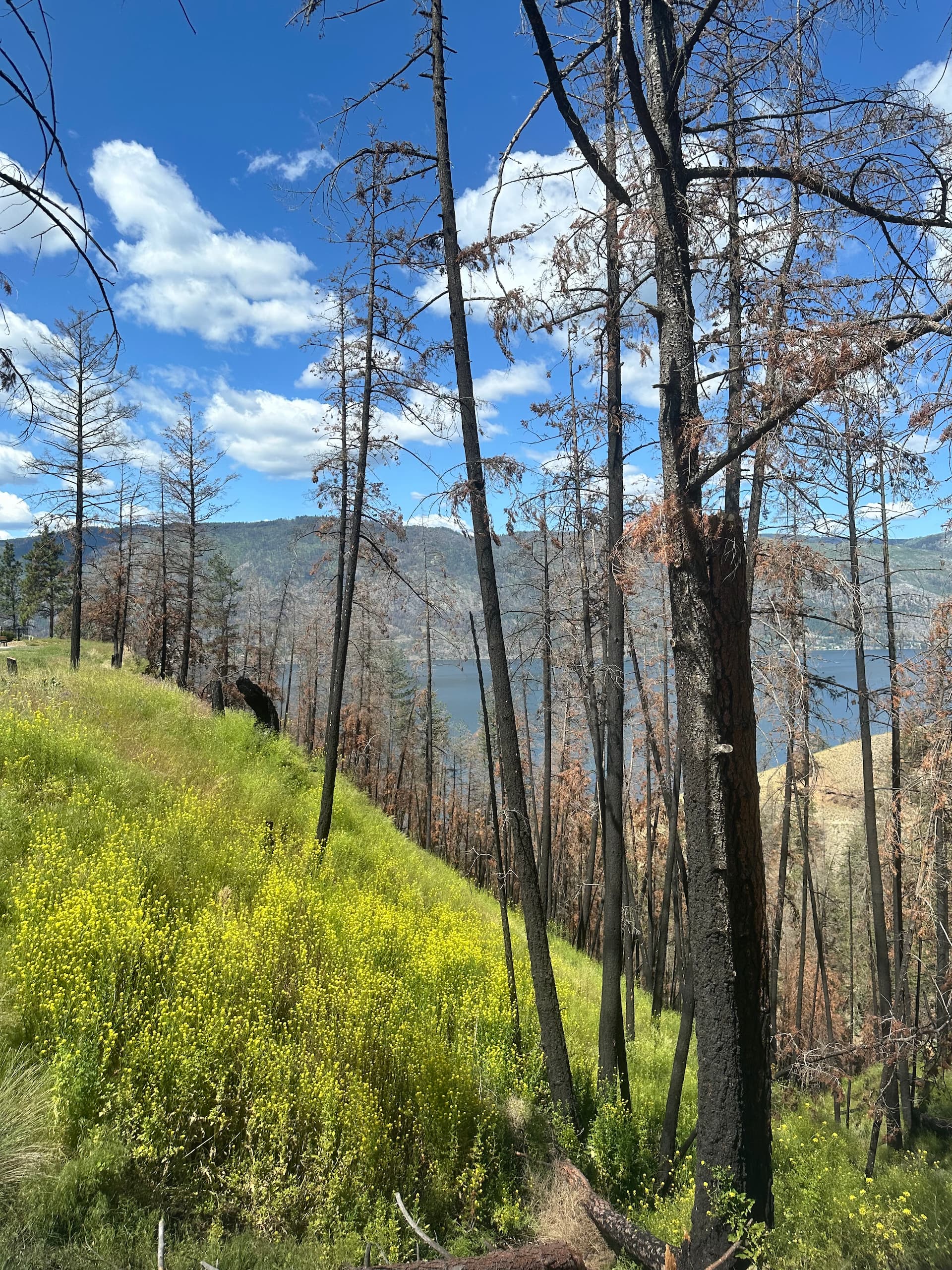
Tree Pruning & Crown Shaping after an emergency is not cosmetic polishing. It is a structural correction intended to manage weight, reduce future breakage potential, and help the tree settle into a safer form. The art is knowing when enough is enough. Over-pruning in the name of safety can create its own problems, especially if it strips the tree of too much functional canopy.
The place for Tree Cable and Bracing
Structural support systems tend to attract strong opinions. Some people treat cables and braces as a miracle fix. Others dismiss them entirely. The practical truth is narrower. Tree Cable and Bracing are tools, not promises.
The value of support systems lies in risk reduction for selected defects or structural concerns, not in turning a failing tree into a permanently safe one. Since no tree is completely safe, support systems must be considered within a broader risk framework. They are most useful when paired with informed pruning and ongoing evaluation. They are least useful when installed to avoid a difficult decision about a tree that has already crossed into unreasonable risk.
In emergency contexts, support may be part of a retention strategy after assessment, but it should never be treated as a substitute for Dangerous Tree Assessment and Removal where removal is truly warranted. A support system can help manage certain loads. It cannot reverse critical structural failure.
FireSmart thinking belongs in restoration planning
Not every emergency begins with wind or breakage. In many regions, restoration planning also overlaps with wildfire exposure. FireSmart Tree Services fit naturally into this conversation because the way trees are managed around structures can influence future risk, even if the original callout was unrelated to fire.
That does not mean emergency crews should improvise wildfire prescriptions on the spot. It means that once immediate hazards are controlled, the property owner has an opportunity to ask broader questions about spacing, fuel continuity, and whether damaged or poorly placed trees should be addressed as part of a safer long-term plan. When a site is already being re-evaluated after a tree failure, it often makes sense to consider whether future vulnerability can be reduced at the same time.
Professional tree care is strongest when it looks one step beyond the immediate mess. A fallen limb gets removed today. The remaining trees, target areas, and maintenance priorities should be considered with tomorrow in mind.
What a sound emergency response usually includes
The details vary by site, but most competent emergency operations share a few core elements:
- An initial hazard evaluation before cutting begins.
- A decision on whether the tree should be retained, partially mitigated, or fully removed.
- Controlled work methods for limbs and sections that may shift, drop, or bind.
- Restoration pruning or structural correction where retention is appropriate.
- A clear plan for follow-up work such as Stump Removal & Grinding or additional assessment.
That sequence is simple on paper. In practice, each step depends on the one before it. Skip the assessment and the rest becomes guesswork.
Common mistakes property owners make after a tree emergency
Most bad outcomes do not come from malice. They come from urgency, incomplete information, or an understandable desire to clear the problem before it gets worse. A few mistakes show up repeatedly.
First, people assume that if a tree is still standing, it is stable. That is not always true. A standing tree may be one cut away from sudden movement, or one gust away from a secondary failure.
Second, they focus on what touched the house and ignore what is suspended overhead. Hanging wood has caused more than a few close calls simply because it was out of the line of sight from the front door.
Third, they treat all cleanup contractors as interchangeable. Tree work is specialized, and emergency tree work is more specialized still. The fact that someone owns a chainsaw says nothing about their ability to assess a damaged crown or manage a compromised stem safely.
Fourth, they rush straight to complete removal when preservation may be feasible, or insist on saving a tree that has no reasonable path to retention. Those are opposite errors, but both come from deciding before the assessment is finished.
Choosing the right level of intervention
The most professional emergency recommendations are often measured rather than dramatic. That can surprise clients who expect a binary answer. Keep it or remove it. The reality is more nuanced.
A systematic risk approach asks whether the current level of risk is acceptable, and if not, what measures can reduce it. Sometimes the answer is straightforward Tree Removal Services. Sometimes it is targeted Tree Pruning & Crown Shaping plus monitoring. Sometimes a Certified Arborist Consultation is the most valuable first step because the conditions are too complex for a snap decision. And in selected cases, Tree Cable and Bracing may support a retention plan after the immediate emergency has been stabilized.
The best decision is not the biggest one. It is the one that matches the defect, the site, and the targets present.
Questions worth asking when the crew arrives
In the middle of an emergency, homeowners often do not know what to ask. A short, practical conversation can reveal whether the response is grounded in arboricultural judgment or just momentum.
- What is the immediate hazard you see, and what could move next?
- Are you recommending full removal, partial mitigation, or temporary stabilization first?
- If the tree is being retained, what restoration pruning is needed afterward?
- Is there follow-up work that should be scheduled separately, such as stump grinding or a broader arborist assessment?
- Are there remaining trees on site that should be looked at because of the same event?
Those questions are not technical theater. They force the plan into the open. A capable professional should be able to answer them in plain language.
The standard that matters most
Emergency tree work tends to be remembered by what disappears. The branch is off the roof. The driveway is open. The trunk is gone. But the standard that matters most is not how quickly the mess vanished. It is whether the risk was evaluated honestly and reduced responsibly.
That is the thread connecting Emergency Tree Services, Dangerous Tree Assessment and Removal, Tree Pruning & Crown Shaping, Tree Cable and Bracing, Stump Removal & Grinding, and FireSmart Tree Services. They are not separate upsells when handled properly. They are different tools within one discipline: managing trees in a way that respects both safety and sound arboriculture.
When the work is done well, the property looks calmer, but that is only the visible part. The more important result is that the site is safer, the decisions are defensible, and the remaining trees, if any, have been treated with the kind of judgment that emergency conditions demand.
Name: Ace Tree Services Ltd.
Address: 4656 Wallace Hill Road, Kelowna, BC
Phone: 250-212-9593
Website: https://acetree.ca/
Hours:
Monday: 7:00 AM–5:00 PM
Tuesday: 7:00 AM–5:00 PM
Wednesday: 7:00 AM–5:00 PM
Thursday: 7:00 AM–5:00 PM
Friday: 7:00 AM–5:00 PM
Saturday: 7:00 AM–5:00 PM
Sunday: Closed
Emergency tree services: 24/7 emergency service is listed.
Open-location code / Plus code: RHF8+8G Kelowna, British Columbia, Canada
Map/listing URL: https://www.google.com/maps/place/Ace+Tree+Services+Ltd./@49.8232606,-119.4337283,563m/data=!3m1!1e3!4m6!3m5!1s0x537d8b1d074815c5:0x450b88afa7a41435!8m2!3d49.8232606!4d-119.4337283!16s%2Fg%2F11ydkpnh22
Embed iframe:
Socials: https://www.facebook.com/people/Ace-Tree-Services/61585901931447/
https://m.yelp.com/biz/ace-tree-services-kelowna
Ace Tree Services Ltd. provides professional tree service for residential, commercial, and municipal customers in Kelowna and across the Okanagan Valley.
The company’s listed services include tree removal, stump removal and grinding, tree pruning and crown shaping, emergency tree services, certified arborist consultation, dangerous tree assessment, tree cable and bracing, and wildfire mitigation.
Ace Tree Services works with homeowners, businesses, property managers, and public-sector clients that need safe, practical tree care in the Kelowna area.
The official site highlights ISA-certified arborists, insurance, and experience handling both routine and complex tree service situations.
Customers can contact Ace Tree Services for tree care planning, hazard concerns, emergency tree cleanup, pruning needs, stump grinding, or advice about trees near homes, fences, driveways, and landscaping.
Ace Tree Services lists regular work hours from 7:00 AM to 5:00 PM Monday through Friday, with 24/7 emergency tree service available for urgent situations.
For tree service in Kelowna, call 250-212-9593 or visit https://acetree.ca/
The public map listing places Ace Tree Services Ltd. in Kelowna and can help customers find directions to the Wallace Hill Road area.
Popular Questions About Ace Tree Services Ltd.
What services does Ace Tree Services Ltd. provide?
Ace Tree Services Ltd. provides tree removal, stump removal and grinding, tree pruning and crown shaping, emergency tree services, certified arborist consultation, dangerous tree assessment and removal, tree cable and bracing, and wildfire mitigation.
Where is Ace Tree Services Ltd. located?
The official website lists Ace Tree Services Ltd. at 4656 Wallace Hill Road, Kelowna, BC.
What areas does Ace Tree Services Ltd. serve?
The official website describes Ace Tree Services as located in Kelowna and servicing the Okanagan.
What phone number should customers call?
Customers can call Ace Tree Services Ltd. at 250-212-9593.
What are Ace Tree Services Ltd.’s regular hours?
The official website lists work hours as 7:00 AM to 5:00 PM, Monday through Friday. Saturday and Sunday regular hours are not listed and should be confirmed directly.
Does Ace Tree Services Ltd. offer emergency tree service?
Yes. The official website lists 24/7 emergency services for urgent tree situations, including emergency tree removal, dangerous tree assessment, stabilization, and limb or branch cleanup.
Does Ace Tree Services Ltd. have certified arborists?
Yes. The official website states that Ace Tree Services has ISA-certified arborists.
Can Ace Tree Services Ltd. help with wildfire mitigation?
Yes. Wildfire mitigation is listed as one of the company’s tree services.
How do I contact Ace Tree Services Ltd.?
Call 250-212-9593 or visit https://acetree.ca/.
Landmarks Near Kelowna, BC
Wallace Hill Road: A local Kelowna road near the address listed for Ace Tree Services Ltd.
Okanagan Lake: A major Kelowna landmark near residential, commercial, and waterfront properties that may need tree pruning, removal, or hazard assessment.
Downtown Kelowna: A central area with homes, offices, rental properties, restaurants, and commercial sites that may need professional tree care.
Mission / Lower Mission: A well-known Kelowna area with mature landscaping, residential properties, and lake-adjacent homes.
South East Kelowna: A rural and residential area with larger properties, orchards, and tree-care needs that can include pruning, removals, and wildfire mitigation.
Crawford: A residential area near the southeast side of Kelowna where homeowners may need tree trimming, hazard assessment, and stump grinding.
Kettle Valley: A hillside residential neighborhood where tree condition, slope, wind exposure, and defensible-space planning can matter for property owners.
Myra-Bellevue Provincial Park: A major outdoor landmark near southeast Kelowna and a useful point of orientation for nearby properties.
Gallagher’s Canyon: A residential and golf community near southeast Kelowna where tree maintenance and wildfire-conscious vegetation management can be practical concerns.
Orchard Park Shopping Centre: A major central Kelowna retail landmark and reference point for customers traveling across the city.
Highway 97: A major Kelowna corridor connecting neighborhoods, commercial properties, and service routes throughout the region.
Kelowna City Park: A recognizable central landmark near downtown neighborhoods and lakefront properties.
Glenmore: A Kelowna neighborhood with residential and commercial properties that may need pruning, storm cleanup, and general tree care.
Rutland: A large residential and commercial area where customers may need tree removal, pruning, stump grinding, or arborist consultation.
Black Mountain: A hillside community where slope, wind, wildfire exposure, and access can influence tree service planning.
For tree service near these Kelowna landmarks, contact Ace Tree Services Ltd. at 250-212-9593 or visit https://acetree.ca/