Tree Cable and Bracing, Pruning, and Other Risk-Reduction Measures
A mature tree can be a defining feature of a property, but maturity often brings structural weight, long lateral limbs, old pruning wounds, storm exposure, and the kind of defects that force difficult decisions. Homeowners usually notice the problem at the same moment the stakes become obvious, a split stem after a wind event, a heavy overextended branch above a driveway, or a lean that suddenly looks different than it did last year. At that point, the real question is not whether a tree can ever be made perfectly safe. It cannot. The better question is whether risk Tree Pruning & Crown Shaping can be reduced to an acceptable level without causing unnecessary damage to the tree or the site.
That is where sound arboricultural judgment matters. Tree work commonly includes maintenance, pruning, removal, and storm-damage response for both residential and commercial properties. Within that broad scope, risk reduction is its own discipline. It asks for a systematic way to identify concerns, analyze what they mean, and match the treatment to the actual problem. Sometimes the answer is selective pruning. Sometimes it is a structural support system such as Tree Cable and Bracing. Sometimes a tree has declined past the point where support or pruning would be responsible, and Dangerous Tree Assessment and Removal becomes the honest recommendation.
The hard part is that many trees can look alarming without being immediate failures, while others can fail with very little warning. Experience helps, but experience without method can drift into guesswork. A proper assessment needs both trained eyes and restraint.
The first principle, risk can be reduced, not erased
One of the most useful things a property owner can hear from a qualified professional is also one of the least comforting: there is no completely safe tree. Every tree carries some level of risk simply because it is a large living structure exposed to weather, growth stresses, and changing site conditions. Good tree care does not promise certainty. It reduces unnecessary risk and avoids unnecessary intervention.
That distinction matters because it keeps treatment decisions grounded. A heavy branch over a patio does not automatically mean removal. A visible crack does not automatically mean a cable will solve it. A tree that lost a major limb in a storm does not automatically need to come down. A systematic risk assessment helps sort those cases into sensible categories, then recommend actions that fit the level of concern.
When I have seen poor outcomes in tree care, they often come from one of two extremes. At one extreme, obvious warning signs are ignored because the tree is valued and no one wants to spend money on maintenance. At the other, fear drives aggressive work that removes too much live crown, disfigures the tree, and creates new problems. Both mistakes usually begin with skipping a disciplined evaluation.
Where cable and bracing fit
Tree Cable and Bracing belongs in a narrow but important space. Structural support systems are a treatment option used to reduce the likelihood of certain failures in trees with specific weaknesses. They are not cosmetic upgrades, and they are not a cure for every dangerous condition. They are most useful when a tree has value worth preserving and a support system can reasonably complement other treatments such as pruning and ongoing monitoring.
In practical terms, support systems are usually considered when the tree has a structural concern that may benefit from load sharing or movement limitation. The details of whether a system is appropriate depend on the tree, the defect, the target area below, and the condition of the rest of the crown and stem. That is why Certified Arborist Consultation is so important at the front end. The recommendation should come from someone trained in tree biology, structure, and risk assessment, not from someone selling a one-size-fits-all fix.
Support systems also demand follow-through. A cable or brace does not end the conversation. It becomes part of the tree’s management plan. The tree still needs inspection, and it may still need Tree Pruning & Crown Shaping to reduce end weight, improve crown architecture, or manage competing leaders. In some cases, pruning is the more important treatment and the support system is secondary. In others, the support system may not be appropriate at all because the defect is too advanced, the overall condition is too poor, or the target risk is too high.
Pruning is often the most effective risk-reduction tool
People sometimes think of pruning as appearance work, something done to “tidy up” a tree. That misses its real value. Done properly, pruning is one of the most practical ways to reduce risk while preserving canopy cover and long-term function.
Risk-reduction pruning can take several forms. Crown reduction may shorten selected limbs to decrease leverage and loading. Crown raising can improve clearance over structures, roads, or pedestrian areas. Directional pruning can guide growth away from conflicts. Proper branch removal and reduction cuts help the tree respond more effectively than random heading cuts or stubs.
The distinction between proper pruning and harmful pruning is not cosmetic, it is structural. Poor cuts can leave stubs, invite decline around the wound area, or force weak regrowth patterns that create larger hazards later. Topping is another familiar example of a practice that may seem decisive in the moment but often creates a cycle of stress, poor structure, and repeated maintenance. That is why competent Tree Pruning & Crown Shaping is not a side service added as an afterthought. It is core arboricultural work.
A well-pruned tree often looks like very little was done. That is usually a sign of good judgment. The crown still looks natural, the weight distribution is improved, and the work solves a problem without advertising itself from across the street.
What a trained assessment actually does
Before anyone recommends support, pruning, or Tree Removal Services, the job should begin with assessment. Risk assessment in arboriculture is a systematic process. It identifies the concern, analyzes the likelihood and consequences, and evaluates which measures could reduce risk to a more acceptable level. That sounds formal, but it leads to very practical decisions.
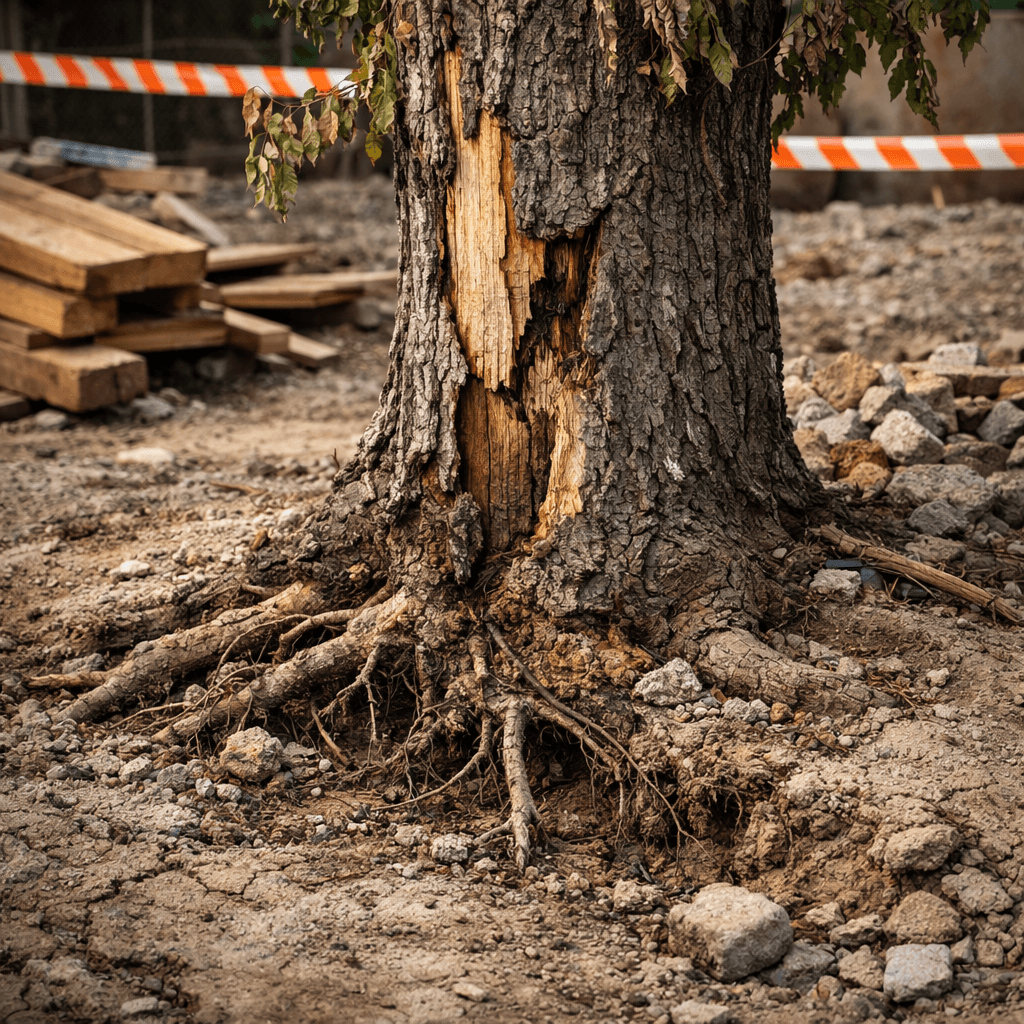
A good assessor is not only asking what is wrong with the tree. They are also asking what the tree might hit if something fails, how often that target is occupied, whether the concern is isolated or part of a larger decline pattern, and whether intervention will improve the situation in a durable way.
That last point matters. Some treatments look active but do not actually improve the risk picture. Others can help if they are paired thoughtfully. A split stem may prompt discussion of support. An overextended branch may call for reduction pruning. A storm-damaged crown may require controlled removal of broken wood before the remaining structure can even be evaluated properly. In each case, the recommendation should be tied to an observed condition and a defensible purpose.
This is where a Certified Arborist Consultation adds real value. ISA Certified Arborists are trained in the art and science of tree care, pass a comprehensive exam, continue their education, and work under a code of ethics. That does not mean every certified person will make the same call on every tree, because judgment is still part of the work. It does mean the process should be informed by training rather than impulse.
When support and pruning are not enough
Some trees simply move out of the preservation category. That can be hard for a homeowner to accept, especially when the tree has sentimental value or dominates the landscape. But a responsible recommendation must put people, structures, and site use ahead of attachment.
Dangerous Tree Assessment and Removal becomes the right path when defects are too significant, when the condition of the tree is too compromised, or when the target exposure below is too important to justify retaining the tree. In those cases, Tree Removal Services are not a failure of arboriculture. They are part of arboriculture. Knowing when not to preserve a tree is just as important as knowing how to preserve one.
The same realism applies after removal. If the stump remains in a high-use area, creates a trip hazard, interferes with replanting, or simply prevents the site from being restored, Stump Removal & Grinding may be the sensible next step. That step is often overlooked in early conversations, yet it affects how quickly a property becomes usable again and whether replacement planting is practical.
I have seen clients delay a difficult removal for months because they hoped for a less final alternative. Sometimes that delay changes nothing. Sometimes it narrows the safe working window, especially after repeated storm exposure. A clear recommendation delivered early is kinder than a vague one delivered too late.
Storms, urgency, and the temptation to rush
Emergency work changes the pace, but it should not erase standards. Emergency Tree Services exist because trees and weather do not wait for calm scheduling. After a storm, crews may be dealing with hanging limbs, partially failed crowns, blocked access, or trees impacting structures. The urgency is real. So is the danger.
Pruning or removing trees, especially large trees, is dangerous work and should be done by people who are trained and properly equipped. That statement is not cautionary boilerplate. It is the baseline. Storm-damaged trees are unpredictable. Loaded limbs can shift. Broken tops can remain suspended. Root systems may be compromised even when the stem is still standing.
In emergency conditions, one of the clearest signs of professional work is controlled movement. Arboricultural rigging and controlled lowering techniques allow crews to manage sections of wood rather than letting them fall where gravity takes them. Even when the final treatment is obvious, the path to get there still requires care. A reckless cut made under pressure can turn a damaged tree into a serious incident.
For property owners, the safest instinct after a storm is often the least dramatic one: keep clear, restrict access if possible, and get qualified eyes on the tree before anyone starts improvising. A ladder, a rope from the hardware store, and confidence are not a substitute for training.
Fire exposure changes the conversation
In some regions, wildfire risk adds another layer to tree management. FireSmart Tree Services fit into the same broader goal as pruning and structural support, which is reducing risk through informed site-specific work. Here again, the best approach is not blind clearing or panic cutting. It is measured planning.
A FireSmart approach may overlap with pruning, spacing, species management, and removal of specific hazards, but the principle remains the same as in structural risk management: match the treatment to the actual risk. Over-thinning or aggressive canopy reduction done without context can leave a site looking “safer” while creating other problems, including heat stress for retained trees or poor form in regrowth. The most useful plans are the ones that balance defensible space objectives with tree health and long-term maintenance.
This is another area where property owners benefit from consultation rather than assumptions. Fire exposure, like structural failure potential, is not managed well by slogans. It is managed by observation, prioritization, and work that is done correctly.
Why poor pruning decisions keep creating new hazards
The tree care industry spends a surprising amount of time correcting old mistakes. Many of the hazards that later require intervention begin with bad cuts, rushed clearance work, or the belief that any reduction is helpful if it makes the tree smaller.
Improper techniques such as topping or leaving stubs can push trees into weak regrowth patterns or poor wound response. That can produce dense shoots, awkward attachment points, and repeated maintenance cycles that cost more over time than proper pruning would have cost once. The problem is not only biological. It is financial and structural.
This is why low bids tied to vague promises should raise concern. If the proposal does not clearly define the pruning objective, such as crown reduction, crown raising, or directional pruning, there is a good chance the work is being sold as a volume exercise rather than a targeted treatment. Risk-reduction pruning is selective by nature. It solves a problem by choosing the right cuts, not the highest number of cuts.
Practical signs that a tree deserves prompt professional review
Most trees do not need urgent attention every season, but some conditions should move a property owner from “I should keep an eye on that” to “I need an assessment.”
- A fresh crack, split stem, or sudden change after wind or snow
- Large dead or broken branches over a target area
- Noticeable shifting, leaning, or root disturbance
- A history of repeated limb failure from the same area
- A mature tree with structural concerns near homes, roads, or frequently used spaces
That list is intentionally simple. It is not a diagnostic tool, and it is not meant to replace a site visit. Its value is in helping people recognize when delay is the real risk.
Choosing the right measure, not the loudest one
One of the best outcomes in tree care is a recommendation that sounds less dramatic than the client expected but solves the actual problem. A carefully pruned crown may remove the need for heavier intervention. A support system may preserve a tree that would otherwise be lost. A removal may prevent years of recurring expense on a tree that is no longer defensible to retain.
The wrong outcome is work chosen for emotional comfort or visual theater. I have met property owners who felt reassured because a crew proposed “doing a lot” to a tree. More cuts, more hardware, more visible activity, more certainty in the sales pitch. Yet the right treatment in arboriculture is often more selective than people imagine. It is based on what improves the risk profile while respecting the tree’s biology and the site’s use.
That is also why second opinions can be valuable on important trees. If one company recommends immediate removal and another recommends support and pruning, the difference should not be settled by price alone. Ask what defect was observed, what risk is being reduced, why that treatment fits, and what follow-up is expected. A professional should be able to explain the reasoning in plain language.
What homeowners and property managers can do before the crew arrives
Preparation will not replace professional skill, but it can make the process smoother and safer. Good communication at the start often leads to better outcomes, especially on complex sites or after storms.
- Describe any recent changes, such as storms, limb drop, or visible cracking
- Point out targets of concern, including roofs, play areas, driveways, and utility access
- Share any past work done on the tree, especially major pruning or previous storm damage
- Ask whether the recommendation is preservation, risk reduction, or removal
- Clarify whether cleanup includes debris handling and whether Stump Removal & Grinding is part of the scope if removal is recommended
Those questions help move the conversation from general worry to a defined work plan. They also reveal whether the provider is thinking systematically or simply reacting.
The value of measured, ethical tree care
Tree care sits at an unusual intersection of biology, physics, aesthetics, and public safety. That is why the best practitioners tend to be both technically grounded and conservative in their promises. They know that mature trees are worth preserving when they can be preserved responsibly. They also know that false reassurance is dangerous.
A tree with structural issues does not always need to be removed. A tree that frightens a homeowner does not always need a cable. A tree that has failed once is not automatically beyond saving, but neither is it automatically a candidate for preservation. The answer depends on a trained evaluation and a treatment plan that actually matches the defect, the site, and the level of use below.
Whether the solution is Tree Cable and Bracing, precise Tree Pruning & Crown Shaping, Emergency Tree Services after a storm, or full Dangerous Tree Assessment and Removal followed by Tree Removal Services, the standard should stay the same. The work should be deliberate, defensible, and performed by trained professionals using accepted methods. That is how risk reduction becomes more than a marketing phrase. It becomes a practical way to protect people, preserve valuable trees where appropriate, and make tough decisions honestly when preservation is certified arborist tree report no longer the right call.
Name: Ace Tree Services Ltd.
Address: 4656 Wallace Hill Road, Kelowna, BC
Phone: 250-212-9593
Website: https://acetree.ca/
Hours:
Monday: 7:00 AM–5:00 PM
Tuesday: 7:00 AM–5:00 PM
Wednesday: 7:00 AM–5:00 PM
Thursday: 7:00 AM–5:00 PM
Friday: 7:00 AM–5:00 PM
Saturday: 7:00 AM–5:00 PM
Sunday: Closed
Emergency tree services: 24/7 emergency service is listed.
Open-location code / Plus code: RHF8+8G Kelowna, British Columbia, Canada
Map/listing URL: https://www.google.com/maps/place/Ace+Tree+Services+Ltd./@49.8232606,-119.4337283,563m/data=!3m1!1e3!4m6!3m5!1s0x537d8b1d074815c5:0x450b88afa7a41435!8m2!3d49.8232606!4d-119.4337283!16s%2Fg%2F11ydkpnh22
Embed iframe:
Socials: https://www.facebook.com/people/Ace-Tree-Services/61585901931447/
https://m.yelp.com/biz/ace-tree-services-kelowna
Ace Tree Services Ltd. provides professional tree service for residential, commercial, and municipal customers in Kelowna and across the Okanagan Valley.
The company’s listed services include tree removal, stump removal and grinding, tree pruning and crown shaping, emergency tree services, certified arborist consultation, dangerous tree assessment, tree cable and bracing, and wildfire mitigation.
Ace Tree Services works with homeowners, businesses, property managers, and public-sector clients that need safe, practical tree care in the Kelowna area.
The official site highlights ISA-certified arborists, insurance, and experience handling both routine and complex tree service situations.
Customers can contact Ace Tree Services for tree care planning, hazard concerns, emergency tree cleanup, pruning needs, stump grinding, or advice about trees near homes, fences, driveways, and landscaping.
Ace Tree Services lists regular work hours from 7:00 AM to 5:00 PM Monday through Friday, with 24/7 emergency tree service available for urgent situations.
For tree service in Kelowna, call 250-212-9593 or visit https://acetree.ca/
The public map listing places Ace Tree Services Ltd. in Kelowna and can help customers find directions to the Wallace Hill Road area.
Popular Questions About Ace Tree Services Ltd.
What services does Ace Tree Services Ltd. provide?
Ace Tree Services Ltd. provides tree removal, stump removal and grinding, tree pruning and crown shaping, emergency tree services, certified arborist consultation, dangerous tree assessment and removal, tree cable and bracing, and wildfire mitigation.
Where is Ace Tree Services Ltd. located?
The official website lists Ace Tree Services Ltd. at 4656 Wallace Hill Road, Kelowna, BC.
What areas does Ace Tree Services Ltd. serve?
The official website describes Ace Tree Services as located in Kelowna and servicing the Okanagan.
What phone number should customers call?
Customers can call Ace Tree Services Ltd. at 250-212-9593.
What are Ace Tree Services Ltd.’s regular hours?
The official website lists work hours as 7:00 AM to 5:00 PM, Monday through Friday. Saturday and Sunday regular hours are not listed and should be confirmed directly.
Does Ace Tree Services Ltd. offer emergency tree service?
Yes. The official website lists 24/7 emergency services for urgent tree situations, including emergency tree removal, dangerous tree assessment, stabilization, and limb or branch cleanup.
Does Ace Tree Services Ltd. have certified arborists?
Yes. The official website states that Ace Tree Services has ISA-certified arborists.
Can Ace Tree Services Ltd. help with wildfire mitigation?
Yes. Wildfire mitigation is listed as one of the company’s tree services.
How do I contact Ace Tree Services Ltd.?
Call 250-212-9593 or visit https://acetree.ca/.
Landmarks Near Kelowna, BC
Wallace Hill Road: A local Kelowna road near the address listed for Ace Tree Services Ltd.
Okanagan Lake: A major Kelowna landmark near residential, commercial, and waterfront properties that may need tree pruning, removal, or hazard assessment.
Downtown Kelowna: A central area with homes, offices, rental properties, restaurants, and commercial sites that may need professional tree care.
Mission / Lower Mission: A well-known Kelowna area with mature landscaping, residential properties, and lake-adjacent homes.
South East Kelowna: A rural and residential area with larger properties, orchards, and tree-care needs that can include pruning, removals, and wildfire mitigation.
Crawford: A residential area near the southeast side of Kelowna where homeowners may need tree trimming, hazard assessment, and stump grinding.
Kettle Valley: A hillside residential neighborhood where tree condition, slope, wind exposure, and defensible-space planning can matter for property owners.
Myra-Bellevue Provincial Park: A major outdoor landmark near southeast Kelowna and a useful point of orientation for nearby properties.
Gallagher’s Canyon: A residential and golf community near southeast Kelowna where tree maintenance and wildfire-conscious vegetation management can be practical concerns.
Orchard Park Shopping Centre: A major central Kelowna retail landmark and reference point for customers traveling across the city.
Highway 97: A major Kelowna corridor connecting neighborhoods, commercial properties, and service routes throughout the region.
Kelowna City Park: A recognizable central landmark near downtown neighborhoods and lakefront properties.
Glenmore: A Kelowna neighborhood with residential and commercial properties that may need pruning, storm cleanup, and general tree care.
Rutland: A large residential and commercial area where customers may need tree removal, pruning, stump grinding, or arborist consultation.
Black Mountain: A hillside community where slope, wind, wildfire exposure, and access can influence tree service planning.
For tree service near these Kelowna landmarks, contact Ace Tree Services Ltd. at 250-212-9593 or visit https://acetree.ca/