Tree Cable and Bracing: When Support Systems Make Sense
Trees do not fail for just one reason. In practice, failure usually comes from a mix of structure, weather, species traits, site conditions, and deferred maintenance. A mature shade tree may look solid from the driveway and still carry a weak union twenty feet up, a long overextended limb over the roof, or a split that began years ago after an ice storm. That is where tree cable and bracing enters the conversation.
Support systems are not miracle cures. They do not make a decayed trunk sound again, and they do not erase every risk. What they can do, when chosen carefully and installed properly, is reduce the chance of structural failure in specific situations and buy a tree more years of safe, useful life. In the right tree, that matters. A well-placed support system can preserve summer shade over a patio, protect a legacy oak that frames a home, or keep a valuable specimen from being lost when alternatives are too aggressive.
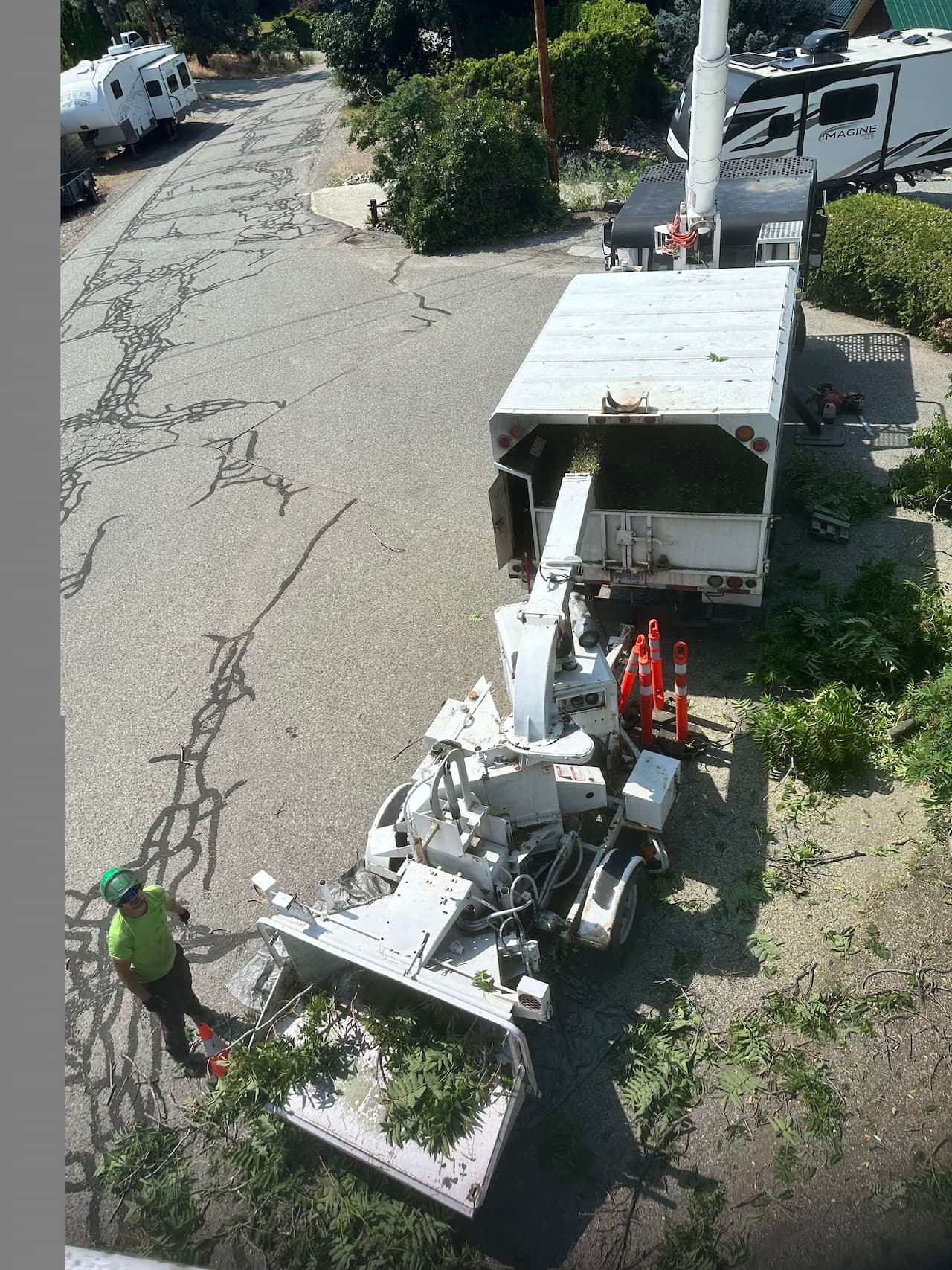
I have seen support systems work beautifully, especially on codominant stems with included bark, broad-canopied ornamentals with weak crotches, and older landscape trees that would be badly disfigured by heavy reduction. I have also seen them used as a bandage on trees that were past saving. That distinction is the whole subject. Knowing when support makes sense is far more important than knowing that support systems exist.
What cable and bracing actually does
Tree Cable and Bracing refers to hardware installed in a tree to limit excessive movement or reinforce weak structural points. Cables are usually placed higher in the canopy to reduce the spread between stems or limbs. Braces, often threaded rods, are installed through cracked unions or weak attachments to hold wood together and resist separation.
Think of cabling as limiting motion and bracing as reinforcing a point of weakness. They are often paired, but not always. A split union may need rods low in the defect and a cable higher in the canopy. A large horizontal limb with an overextended end weight may benefit from a cable without rods. The exact configuration depends on load paths, species wood strength, branch architecture, and the kind of failure most likely to occur.
The objective is not to lock a tree rigidly in place. Trees need some movement. Movement encourages normal growth and helps the tree distribute stress. Over-restricting motion can create new problems. Good support work respects that balance.
The trees that raise red flags
Not every crooked or asymmetrical tree needs intervention. Trees are naturally irregular. The concern begins when a structural weakness coincides with a target and a credible likelihood of failure. A target might be a home, driveway, play area, sidewalk, parked vehicles, or a neighboring structure. The same weak union over a woodland edge carries a different level of concern than it does over a bedroom roof.
Some recurring examples show up again and again. Codominant stems are one of the most common. These are twin trunks or stems of similar size arising from the same point. If they formed with included bark, where bark is trapped between them instead of healthy connective wood, the union can be significantly weaker than it appears from the ground. Add a heavy canopy, a wet snow event, or a strong wind and the crack can open quickly.
Another common case is the mature ornamental with a broad, vase-like canopy. Bradford pear is notorious, but it is far from alone. Older Japanese maples, crabapples, and multi-stem flowering trees may develop long limbs with weak attachments, especially after years of poor pruning. A support system may help preserve the tree’s form while reducing the risk of a major split.
Then there are the legacy trees, often oaks, beeches, sycamores, and maples, planted decades ago when a lot was first built. These trees have value that goes well beyond replacement cost. Shade, cooling, privacy, and visual character are not restored overnight with a nursery tree. In those cases, a Certified Arborist Consultation is worth every minute. The right recommendation might be pruning alone, support hardware, ongoing monitoring, or, if conditions are too compromised, Dangerous Tree Assessment and Removal.
Support is not a substitute for pruning
One of the biggest misunderstandings about cabling is the idea that hardware alone solves the problem. It rarely does. Most successful support plans include some degree of Tree Pruning & Crown Shaping to reduce end weight, shorten leverage, and improve canopy balance.
If a limb is overextended by ten or fifteen feet beyond the point where the attachment can safely support it, installing a cable without reducing weight may leave too much force in the system. A modest reduction cut, made back to appropriate lateral branches, can significantly decrease bending stress. That pruning must be thoughtful. Cutting too much can trigger stress growth, sunscald in thin-barked species, or a flush of poorly attached watersprouts that create future defects.
I remember a mature red maple over a two-car garage with a classic weak union and a sprawling lateral over the roof. The homeowner had been told by one company that the tree needed immediate removal and by another that a single cable would “take care of it.” Neither answer was complete. The better path was a combination of selective reduction, one steel cable placed high enough to limit over-separation, and periodic inspections. Seven years later the tree was still in place, the canopy was manageable, and the roofline remained protected.
That kind of result is common when support systems are part of a broader management plan instead of a stand-alone fix.
When support systems make sense
The best candidates for cabling and bracing share a few traits. The tree has meaningful value, the defect is structural rather than systemic, and the tree still has enough sound wood and vitality to justify preservation. There also needs to be a realistic maintenance commitment, because support hardware is not a one-time, forget-about-it installation.
Support often makes sense in situations like these:
- a codominant union with included bark that shows strain but retains substantial sound wood
- a cracked branch union where rods can stabilize the split and pruning can reduce leverage
- a large ornamental or shade tree with one or two weak leaders over a high-value target
- a historically or sentimentally important tree that would suffer greatly from over-reduction
- a tree that is otherwise healthy but structurally imperfect in a way that can be managed
The phrase “otherwise healthy” matters. A support system can help a good tree with a bad attachment. It is much less useful for a declining tree with extensive trunk decay, root failure, or advanced disease. If a tree is losing root plate stability, hardware in the canopy will not correct the core problem. In those cases, Tree Removal Services are often the safer recommendation, followed by Stump Removal & Grinding if the site is being replanted or repurposed.
Cases where cabling and bracing is the wrong answer
There is a point where preservation becomes wishful thinking. Arborists see this often after storms, especially when a homeowner wants to save a tree that has sentimental value but little structural future. A support system should never be sold as an excuse to delay a necessary removal.
If a trunk is hollow to a significant degree at a critical load point, if root decay is advanced, if a major crack is actively propagating through the main stem, or if the tree leans because of root plate movement, bracing and cabling may offer false confidence. The danger rises when the target is occupied space. I would rather have a hard conversation early than a worse one after a failure.
Species characteristics matter too. Some trees compartmentalize wounds effectively and tolerate hardware placement fairly well. Others respond poorly or have brittle wood that makes long-term outcomes less predictable. Fast-growing, weak-wooded species near homes often become ongoing management projects. Sometimes repeated support, reduction pruning, and post-storm cleanup cost Tree service more over ten years than replacing the tree with a better species would have cost upfront.
This is one place where Dangerous Tree Assessment and Removal requires judgment rather than slogans. “Save every tree” is not professional advice. Neither is “remove anything with a defect.” The right answer depends on severity, targets, site use, owner priorities, and what the tree can realistically sustain.
Static cables, dynamic systems, and hardware choices
Not all support systems are built the same. Traditional static cabling uses steel cable and hardware to restrict movement more firmly. Dynamic systems use synthetic materials that allow more motion while still limiting extreme displacement. Each has a place.
Static systems are common where the defect is pronounced and movement must be tightly controlled. They are durable and well understood, but they require precise installation and sound anchor points. Dynamic systems can be useful where the goal is supplemental support rather than rigid restraint, especially in younger or more flexible trees. They may better accommodate natural movement, though they are not appropriate in every high-load situation.
Bracing rods are chosen based on the Certified Arborist Consultation defect and wood dimensions. Placement is technical. Too low, too high, too few, or installed in compromised wood, and the rod does not achieve the intended reinforcement. The same is true of cable height. Set it too low and you may not meaningfully reduce separation. Set it too high into weak wood and the anchor itself becomes questionable.
Homeowners do not need to know every engineering detail, but they should know this much: hardware placement is not guesswork. It should follow an assessment of the likely failure mode, the quality of the wood at anchor points, the branch aspect ratio, and the expected loading from wind, foliage, and weather.
Installation quality matters more than most people realize
There is a visible difference between support work done by a skilled arborist and work done as an add-on sale by someone who mostly cuts and removes. Good installations start with climbing access or other methods that avoid damaging the tree, appropriate hardware sizing, clean drilling where rods are needed, proper anchoring, and pruning cuts that complement the support plan.
Poor installations create fresh wounding, place anchors in weak wood, leave hardware rubbing on bark, or ignore the canopy balance that caused the problem in the first place. I have inspected trees with cables installed so low they offered little useful restraint, and others with hardware lagging into decayed sections of stem that never should have been trusted. Support systems should increase confidence, not just look reassuring from the lawn.
That is why a Certified Arborist Consultation is not a formality. It is the stage where the tree’s value, biology, defect severity, and risk exposure are sorted out before holes are drilled or steel goes up into the crown.
Inspection and maintenance are part of the deal
Trees grow, bark expands, wind loads change, and defects evolve. A support system needs follow-up. That does not always mean constant intervention, but it does mean periodic inspection by someone who knows what to look for.
A reasonable maintenance plan usually includes checking hardware condition, anchor integrity, bark response around the installation, and any progression of cracks or decay. The canopy should be reviewed too. A tree that was balanced when the cable went in may become lopsided again after several years of growth. At that point, additional Tree Pruning & Crown Shaping may be needed.
For many residential properties, an inspection cycle of every one to three years is sensible, with immediate reinspection after major wind, snow, or ice events. Older systems deserve closer scrutiny. Hardware does not last forever, and trees do not stop changing once the job is done.
This becomes especially important when a property owner changes hands. New owners often inherit supported trees with no records and no understanding of what was installed or why. If you buy a property with cables or rods in place, have them assessed. Do not assume that because the tree is still standing, the system is doing what it should.
Storms, emergencies, and the moment support is discovered too late
A surprising number of people first hear about support systems after a failure has already begun. A storm opens a union, a limb drops onto a roof, or a crack appears after a night of high wind. At that point, Emergency Tree Services are often the first call, not because every tree must be removed immediately, but because the site needs to be stabilized and the remaining risk assessed.
Sometimes a partially failed tree can still be preserved. If the failure is limited, the remaining structure is sound, and the target can be protected, support plus corrective pruning may be possible after emergency mitigation. Other times, the event reveals how close the tree already was to total failure. Once wood fibers are torn deeply through a trunk or a major leader, support may no longer be appropriate.
Timing matters. Trees assessed before a crisis generally have more options. Trees assessed after a crack widens in a storm often have fewer.
Fire-prone landscapes add another layer of judgment
In wildfire regions, support decisions become more complex. Wildfire Mitigation Tree Services focus on reducing ladder fuels, increasing spacing, improving crown separation, and removing highly combustible material near structures. A structurally weak tree close to a home in a fire-prone zone deserves scrutiny not only for breakage risk but also for ignition potential and emergency access concerns.
That does not mean every cabled tree in a wildfire area should be removed. It does mean preservation has to be weighed against defensible space goals. A valuable shade tree well away from structures may still be a good candidate for support and canopy management. A weak multi-stem tree crowded against the house, dropping debris into gutters and overhanging access routes, may not be worth carrying forward.
Good arboriculture is rarely one issue at a time. Structural risk, species selection, site use, and wildfire mitigation can all intersect on the same property.
The homeowner questions that lead to better decisions
When people are deciding whether to support or remove a tree, the best conversations usually revolve around practical realities rather than emotion alone. How likely is failure within the next few years? What exactly would fail? What sits beneath it? How much sound wood remains? What pruning is needed alongside the hardware? How often should it be inspected? What is the backup plan if the defect progresses anyway?
Those questions tend to reveal whether the recommendation is thoughtful or generic. A professional should be able to explain why support is appropriate for this tree, at this location, with this defect, and why the same approach would not be suitable for another tree across the street.
It is also fair to ask what removal would accomplish and what it would cost in lost shade, aesthetics, and replacement time. Tree Removal Services are sometimes the right call, but mature trees deliver benefits that are easy to underestimate until they are gone. A balanced recommendation acknowledges both sides.
What support can and cannot promise
A well-designed cable or brace can lower the chance of structural failure. It cannot promise zero risk. Trees remain living organisms exposed to weather extremes, unseen decay, and long-term change. If a contractor suggests that one cable makes a tree “safe forever,” that should raise concern.
What support can promise, if done well, is risk reduction within limits. It can preserve a valuable tree that would otherwise require drastic pruning. It can help manage a weak union before it splits catastrophically. It can be part of a sensible plan that includes pruning, monitoring, and, when needed, eventual removal.
The best support systems are almost invisible in use. They do not call attention to themselves. They simply allow a tree with a manageable defect to stand through seasons it might not have otherwise reached.
Making the call with clear eyes
The decision to cable, brace, prune, or remove should come from an honest reading of the tree, not from a desire to avoid difficult choices. If the structure is fundamentally salvageable, support can be one of the most effective preservation tools in arboriculture. If the tree is in decline, severely decayed, or positioned over high-value targets with little margin for error, hardware may only delay the inevitable.
That is why experienced assessment matters. A careful arborist looks beyond the defect you can see from the ground and asks what the tree is likely to do next. Sometimes the answer is support. Sometimes it is reduction. Sometimes it is monitoring. Sometimes it is Dangerous Tree Assessment and Removal followed by Stump Removal & Grinding and a smarter replanting plan.
Each of those outcomes can be the right one. Tree Cable and Bracing makes sense when it is used to preserve a tree that still has a sound future, not to disguise one that does not.
Name: Ace Tree Services Ltd.
Address: 4656 Wallace Hill Rd, Kelowna, BC V1W 4C2, Canada
Phone: 250-212-9593
Website: https://acetree.ca/
Email: [email protected]
Hours:
Sunday: Closed
Monday: 7:00 AM–5:00 PM
Tuesday: 7:00 AM–5:00 PM
Wednesday: 7:00 AM–5:00 PM
Thursday: 7:00 AM–5:00 PM
Friday: 7:00 AM–5:00 PM
Saturday: 7:00 AM–5:00 PM
Time zone: Pacific Time
Open-location code / Plus code: RHF8+8G Kelowna, British Columbia, Canada
Map/listing URL: https://www.google.com/maps/search/?api=1&query=Google&query_place_id=ChIJxRVIBx2LfVMRNRSkp6-IC0U
Embed iframe:
Socials:
https://www.facebook.com/p/Ace-Tree-Services-61585901931447/
Ace Tree Services Ltd. provides professional tree care from its Kelowna location on Wallace Hill Road.
The official website lists tree removal, stump removal and grinding, tree pruning and crown shaping, emergency tree services, certified arborist consultation, dangerous tree assessment and removal, tree cabling and bracing, and wildfire mitigation.
Ace Tree Services serves homeowners, businesses, and property owners in Kelowna and throughout the Okanagan Valley.
The company’s official site highlights ISA Certified Arborist support, local Okanagan experience, and fully insured tree service work.
Customers can contact Ace Tree Services for planned tree maintenance, high-risk removals, storm-related tree concerns, pruning, stump grinding, and arborist consultation needs.
The supplied public listing address is 4656 Wallace Hill Rd, Kelowna, BC V1W 4C2, near rural and residential service areas in southeast Kelowna.
For tree services in Kelowna and the Okanagan, call 250-212-9593, email [email protected], or visit https://acetree.ca/
The public map listing uses plus code RHF8+8G Kelowna, British Columbia, Canada and can help customers find Ace Tree Services Ltd. near Wallace Hill Road.
Popular Questions About Ace Tree Services Ltd.
What does Ace Tree Services Ltd. do?
Ace Tree Services Ltd. provides tree removal, stump removal and grinding, tree pruning and crown shaping, emergency tree service, certified arborist consultation, dangerous tree assessment and removal, tree cabling and bracing, and wildfire mitigation.
Where is Ace Tree Services Ltd. located?
Ace Tree Services Ltd. is listed at 4656 Wallace Hill Rd, Kelowna, BC V1W 4C2, Canada.
What phone number should customers call?
Customers can call Ace Tree Services Ltd. at 250-212-9593.
What is the email address for Ace Tree Services Ltd.?
The supplied email address is [email protected].
What are Ace Tree Services Ltd.’s hours?
The supplied listing hours show Monday through Saturday from 7:00 AM to 5:00 PM, with Sunday closed, Pacific Time. The official website lists 7:00 AM to 5:00 PM, Monday through Friday, so customers should confirm Saturday availability before booking.
Does Ace Tree Services Ltd. provide emergency tree service?
Yes. The official website lists emergency tree services, including emergency tree removal, dangerous tree assessment, emergency stabilization, and limb or branch cleanup.
Does Ace Tree Services Ltd. offer arborist consultations?
Yes. The official services page lists certified arborist consultation as one of the company’s Okanagan tree services.
Does Ace Tree Services Ltd. provide stump grinding?
Yes. The official services page lists stump removal and grinding as a service.
What areas does Ace Tree Services Ltd. serve?
The official website states that Ace Tree Services serves Kelowna and the Okanagan Valley.
How do I contact Ace Tree Services Ltd.?
Call 250-212-9593, email [email protected], visit https://acetree.ca/, or use the listed social profile: Facebook.
Landmarks Near Kelowna, BC
Wallace Hill Road: The road listed for Ace Tree Services Ltd. and a practical reference point for the company’s Kelowna location.
East Kelowna: A nearby rural and residential area where tree maintenance, pruning, removals, and wildfire mitigation can be important for property owners.
Myra-Bellevue Provincial Park: A major outdoor landmark southeast of Kelowna and a useful reference for the surrounding hillside and forested areas.
Gallagher’s Canyon: A nearby Kelowna community with residential properties, mature trees, and landscape maintenance needs.
Kettle Valley: A southeast Kelowna neighborhood with homes, parks, and landscaped properties.
Mission Creek Greenway: A well-known natural corridor in Kelowna and a local reference point for tree-lined recreation areas.
Orchard Park Shopping Centre: A major Kelowna retail landmark and citywide reference point.
Downtown Kelowna: A central business and residential district within Ace Tree Services’ broader Kelowna service area.
Okanagan Lake: A major regional landmark running through Kelowna and the surrounding Okanagan Valley.
Mission Creek Regional Park: A recognizable Kelowna park and natural landmark with extensive trees and trails.
Rutland: A large Kelowna community with residential and commercial properties that may need tree service support.
Glenmore: A Kelowna neighborhood with homes, parks, and established trees.
Lower Mission: A residential and lake-adjacent Kelowna area where pruning, tree health, and property safety can matter for homeowners.
Kelowna International Airport: A major transportation landmark north of central Kelowna.
West Kelowna: A nearby Okanagan community across the lake and a practical regional service reference.
For tree removal, stump grinding, pruning, crown shaping, emergency tree service, arborist consultation, dangerous tree assessment, cabling and bracing, or wildfire mitigation near these Kelowna and Okanagan landmarks, contact Ace Tree Services Ltd. at 250-212-9593, email [email protected], or visit https://acetree.ca/