Tree Pruning & Crown Shaping for Fruit Trees and Ornamentals
Tree pruning asks for more judgment than most property owners expect. The same cut that improves light penetration in a mature apple can ruin the spring display on a flowering cherry. A branch that should come off cleanly in January might be better left alone until after bloom in April. Good pruning is less about taking wood away and more about directing growth, preserving structure, and matching the tree to its purpose in the landscape.
That distinction matters whether you are managing backyard fruit production, preserving the form of ornamental trees near a patio, or reducing risk around a driveway and roofline. Tree Pruning & Crown Shaping sits at the center of tree care because it influences almost everything else, from flower set and fruit quality to storm resistance and long-term maintenance costs. Done well, it extends the useful life of a tree. Done poorly, it creates weak regrowth, sunscald, disease entry points, and the kind of structural problems that later require Emergency Tree Services or even Dangerous Tree Assessment and Removal.
After years of watching trees respond to both careful pruning and rough cutting, one lesson comes up again and again: trees remember. A hard topping job done five years ago still shows up in the way a crown breaks apart during wind. An overly dense ornamental left untouched for a decade tells the story in shaded-out interior limbs, poor air flow, and crossing branches rubbing through bark. Every pruning decision sets the next one.
What pruning is really trying to accomplish
For fruit trees, the goals usually center on crop quality, access, and health. You want sunlight to reach fruiting wood, enough air movement to limit fungal pressure, and a framework strong enough to carry a crop without splitting. Height matters too. A twelve-foot peach you can thin and pick safely from the ground is more useful than an eighteen-foot peach that drops half its fruit because no one can reach it in time.
For ornamentals, the aim often shifts. The tree may be valued for blossom, bark, shade pattern, or architectural form. A Japanese maple near an entry walk needs different handling than a pear grown for harvest. Crown shaping in this context is not about forcing every tree into symmetry. In practice, it often means revealing the tree’s best natural character while correcting defects that would shorten its life or create hazard.
That is where experience matters. People often ask for a tree to be “cleaned up,” but that phrase can cover several very different tasks. It might mean removing deadwood, thinning selective interior growth, reducing an overextended limb, lifting low branches for clearance, or restoring structure after storm damage. Each choice has consequences. A light structural prune can improve the crown for years. An indiscriminate shear can leave a tree stressed, exposed, and ugly in a single afternoon.
Fruit trees respond to discipline
Fruit trees reward regular pruning because they are bred and managed for production. Apples and pears tolerate, and often benefit from, annual structure work. Peaches and nectarines usually need more assertive thinning because they fruit on younger wood and can quickly become crowded. Plums and cherries call for a bit more caution, both because of disease timing in some regions and because overpruning can trigger excessive vegetative growth.
A common mistake is treating all fruit trees as if they share the same architecture. They do not. Apples often perform well under a central leader or modified central leader system, especially in larger backyard settings. Peaches usually do better with an open center that brings light into the canopy. Citrus, where climate allows, often need a lighter touch, with emphasis on deadwood removal, skirt management, and preserving leaf area that protects scaffold limbs from sunburn.
When I walk up to a neglected fruit tree, I rarely start by thinking about how much wood needs to come out. I look first for the permanent structure. Where are the scaffolds? Which branches are competing? Is fruiting wood migrating too far out? Are there included bark unions or old heading cuts pushing a thicket of weak shoots? That first read determines whether the tree needs restoration over several seasons or whether it can be brought back into balance in a single visit.
Restoration pruning is especially important with old apples and pears. If you remove too much at once, the tree often answers with a flush of upright water sprouts that crowd the crown all over again. Spreading the work across two or three years usually produces a calmer response and better long-term form. Property owners sometimes resist that approach because they want an instant result, but trees rarely improve through impatience.
Ornamentals are not just smaller shade trees
Ornamental trees are often damaged by overwork. Because they sit near patios, entry walks, windows, and ornamental beds, people tend to prune them for tidiness rather than biology. The result is a landscape full of lion-tailed crape myrtles, topped magnolias, and flowering plums stripped into awkward silhouettes.
Good crown shaping for ornamentals begins with species habit. A dogwood should not be made to resemble a linden. A redbud carries itself differently from a serviceberry. Some trees want layered branching. Others want a more upright framework. The job is to refine that form while removing defects such as crossing limbs, dead stubs, codominant stems with weak attachments, and branches that crowd the interior beyond reason.
The phrase “natural shape” gets overused, but there is a practical truth behind it. Trees that are pruned in keeping with their growth habit generally need fewer corrective cuts later. They distribute weight more sensibly, compartmentalize wounds better, and look settled in the landscape rather than forced. That is especially important for specimen ornamentals, where appearance is part of the value.
Flowering timing also matters. Spring bloomers that set buds on old wood, such as many magnolias and some ornamental cherries, are often best pruned right after flowering if bloom preservation is a priority. Summer bloomers can be more forgiving. Yet even then, timing depends on climate, disease pressure, and the reason for pruning. If a branch is broken, cracked, or hazardous, aesthetics come second.
Timing changes the outcome
There is no universal pruning month, only better or worse windows depending on species and objective. Dormant-season pruning makes structure easy to see and often stimulates vigorous regrowth in spring. That can be useful in young fruit trees where you are building framework, but it may be less desirable in ornamentals prone to heavy shoot response.
Summer pruning tends to be more moderating. It can reduce vigor, improve light to fruit, and help size control. In espaliered apples, for example, summer work can keep Tree Pruning & Crown Shaping form tight and productive. On vigorous shade-producing ornamentals, selective summer reduction can calm a branch without provoking the same level of sprouting you might get from winter cuts.
Disease considerations complicate the calendar. In some regions, pruning oaks during periods of active disease transmission is strongly discouraged. Certain stone fruits are better pruned in dry weather to reduce pathogen entry. Local conditions matter enough that Certified Arborist Consultation is often worth it for high-value trees, especially if the tree is mature, historically significant, or already under stress.
Storm response is its own category. After wet snow, wind, or ice, pruning becomes partly triage. The priority shifts to relieving hazard, making clean reduction or removal cuts, and deciding whether the crown can be restored or whether failure has compromised the tree beyond reasonable repair. That is where Tree Cable and Bracing sometimes enters the conversation. Support systems can help preserve valuable trees with weak unions or partially failed stems, but they are not a substitute for sound structure. A cable can reduce movement. It cannot erase poor pruning history.
The cuts that matter most
Most of the benefit in pruning comes from a relatively small number of well-placed cuts. Removing a dead limb back to the branch collar is straightforward. More skilled work comes in choosing which live limbs to suppress, shorten, or leave.
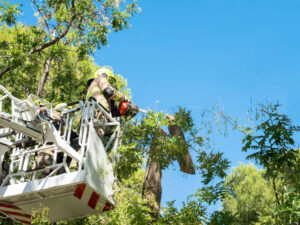
Thinning cuts remove a branch at its point of origin. They open the canopy without creating the same flush of regrowth as heading cuts. Reduction cuts shorten a branch back to a lateral large enough to assume terminal growth. They are essential when reducing end weight or drawing a branch line back into the crown. Heading cuts, by contrast, shorten into the middle of a shoot or branch and often stimulate multiple vigorous sprouts. In fruit tree training they have a place, particularly in young-tree development, but in mature ornamentals they are frequently overused.
Check out this siteThe branch collar deserves respect. Flush cuts that shave tight against the trunk or parent limb remove the tree’s natural defense zone and slow closure. Stub cuts are not much better. They die back, invite decay, and create weakly attached regrowth. If there is one habit I wish more homeowners would abandon, it is the idea that any cut near the trunk is good enough. Placement matters.
Young trees need training, not repeated correction
A properly trained young tree is cheaper to maintain and safer for decades. This is true in orchard rows and front yards alike. Early pruning sets branch spacing, leader dominance, scaffold selection, and clearance height while cuts are small and recovery is fast.
With young fruit trees, that usually means choosing the permanent framework within the first few years and resisting the temptation to let the tree carry too much fruit too early. Heavy early crops bend scaffolds into poor angles and slow establishment. With ornamentals, it means identifying codominant stems before they become major liabilities. A two-inch competing leader is simple to manage. A ten-inch codominant stem hanging over a garage becomes a much more expensive discussion that may involve Tree Removal Services if decay or severe bark inclusion is present.
The best early training has a quiet quality. You do not always notice it right away, but ten years later the tree still looks balanced, branch attachments are stronger, and maintenance cuts remain modest. That is professional tree care at its best, almost invisible once the work is done.
Mature trees require restraint
Mature trees are less forgiving. Large cuts close slowly. Interior foliage that has been shaded for years will not suddenly refill if you remove too much outer crown. This is why crown thinning should be selective rather than aggressive. Old rules about removing a fixed percentage of live crown are too blunt to be useful on their own. Species, age, vigor, site exposure, and prior pruning history all matter more than a generic number.
A mature ornamental over a house may need end-weight reduction rather than overall thinning. A large apple with biennial bearing issues may need renewal of fruiting wood more than height reduction. A mature pear with narrow branch unions may need structural mitigation and ongoing monitoring. In some cases, especially where a valuable specimen has a known defect, Tree Cable and Bracing can buy time and reduce risk as part of a broader management plan.
That said, support systems should not lull anyone into denial. If a tree has advanced decay, root instability, or a major split, the right answer may be Dangerous Tree Assessment and Removal. No amount of shaping turns a failing tree into a safe one. Judgment means knowing when preservation has crossed into wishful thinking.
When pruning intersects with risk management
Most people think of pruning as a horticultural task. In reality, it often sits within a larger risk and site management picture. Limbs over structures, roadways, utility-adjacent spaces, and play areas demand a different level of caution. A crown can look full and green while hiding cracks, dead upper leaders, old storm wounds, or overextended scaffold limbs. That is why visual form alone is a poor measure of safety.
After drought years, I often see trees leaf out enough to appear stable while carrying significant deadwood in upper canopies. Then a summer thunderstorm arrives, and the calls for Emergency Tree Services start. Pruning beforehand could not have prevented every failure, but deadwood removal and end-weight reduction on compromised limbs often would have lowered the chance of breakage.
There is also a wildfire dimension in some regions. Wildfire Mitigation Tree Services often include crown spacing, removal of dead lower limbs, thinning around structures, and managing ladder fuels. The goal is not to scalp every tree. It is to reduce the way fire moves vertically and horizontally through the landscape. On ornamental and fruit trees near homes, that may mean different pruning than you would choose for pure production or display, but the safety benefit can outweigh aesthetic preferences.
A practical way to judge whether a tree needs pruning
For property owners trying to decide whether a tree needs attention this season, a short inspection goes a long way:
- Look for dead, cracked, rubbing, or hanging branches.
- Stand back and check whether one side of the crown is unusually heavy or extended.
- Notice whether the interior is so dense that little light reaches through.
- For fruit trees, see whether fruiting wood has crept too high or too far out to manage safely.
- Check for branches touching roofs, blocking sightlines, or crowding other trees.
That quick review is not a substitute for professional evaluation, but it helps separate cosmetic concern from genuine need.
The work around the tree matters too
Pruning does not happen in isolation. Soil compaction, mulch placement, irrigation patterns, and root disturbance all affect how a tree responds. A heavily pruned tree growing in compacted fill beside a new driveway is more likely to struggle than the same species in a healthy root zone. I have seen homeowners blame a tree’s decline on pruning when the real problem was trenching through major roots six months earlier.
Likewise, tree care decisions often cascade. If a declining ornamental must come out, Tree Removal Services may be only the first step. Stump Removal & Grinding can be important if replanting is planned in the same bed or if the stump sits where turf, hardscape, or a new root flare should go. The point is not to treat every job as a removal job. It is to recognize that pruning exists within a full cycle of landscape management.
Common pruning mistakes that create bigger problems
A few errors show up so often that they are worth naming plainly:
- Topping or heading back major limbs to random points
- Removing too much live crown in one visit
- Leaving long stubs or making flush cuts
- Pruning at the wrong season for bloom or disease pressure
- Ignoring structural defects until they become hazard issues
Each of these mistakes costs more to fix than to avoid. Some cannot be fully corrected at all.
Why professional assessment is sometimes the cheaper option
Homeowners often call for help after a tree has become unmanageable, but the less dramatic situations are where value is easiest to create. A brief Certified Arborist Consultation can clarify whether a fruit tree needs production pruning, whether an ornamental needs structural correction, or whether a suspected problem is actually normal growth. It can also identify when pruning should stop and a broader conversation should begin about support systems, removal, or site redesign.
That matters financially. The cost of selective pruning every few years is usually far lower than emergency storm cleanup, roof damage, or removal of a mature tree that was weakened by years of poor cuts. Even a simple site walk can reveal where one tree is beginning to suppress another, where root competition is stalling growth, or where a codominant stem should be addressed before it becomes a failure point.
Pruning for appearance versus pruning for longevity
There is always some tension between what looks instantly neat and what serves the tree best. A freshly sheared canopy can read as tidy from the street, but that does not mean it is structurally sound or biologically appropriate. Longevity usually favors selective cuts, preservation of branch collars, balanced load distribution, and respect for species form. Those choices may look subtler on day one, but they age better.
Fruit trees make this contrast obvious. A tree cut hard into a simple shape may look organized right after pruning, yet produce a surge of nonproductive shoots and poor fruit placement. A carefully thinned tree can appear almost unchanged to an untrained eye, but by midsummer the fruit colors better, disease pressure drops, and picking is easier. Ornamentals tell the same story over a longer timeline. Good crown shaping keeps them graceful, stable, and proportionate without advertising the hand that shaped them.
The best pruning leaves a tree looking like itself, only healthier and more coherent. That is true for an old backyard apple, a flowering ornamental anchoring the front walk, or a mature specimen being managed for safety in a high-use landscape. Good cuts are deliberate. Good timing is informed. Good outcomes come from reading the tree in front of you rather than applying a formula.
When that approach guides the work, pruning stops being a routine chore and becomes what it should be: skilled stewardship of living structure.
Name: Ace Tree Services Ltd.
Address: 4656 Wallace Hill Rd, Kelowna, BC V1W 4C2, Canada
Phone: 250-212-9593
Website: https://acetree.ca/
Email: [email protected]
Hours:
Sunday: Closed
Monday: 7:00 AM–5:00 PM
Tuesday: 7:00 AM–5:00 PM
Wednesday: 7:00 AM–5:00 PM
Thursday: 7:00 AM–5:00 PM
Friday: 7:00 AM–5:00 PM
Saturday: 7:00 AM–5:00 PM
Time zone: Pacific Time
Open-location code / Plus code: RHF8+8G Kelowna, British Columbia, Canada
Map/listing URL: https://www.google.com/maps/search/?api=1&query=Google&query_place_id=ChIJxRVIBx2LfVMRNRSkp6-IC0U
Embed iframe:
Socials:
https://www.facebook.com/p/Ace-Tree-Services-61585901931447/
Ace Tree Services Ltd. provides professional tree care from its Kelowna location on Wallace Hill Road.
The official website lists tree removal, stump removal and grinding, tree pruning and crown shaping, emergency tree services, certified arborist consultation, dangerous tree assessment and removal, tree cabling and bracing, and wildfire mitigation.
Ace Tree Services serves homeowners, businesses, and property owners in Kelowna and throughout the Okanagan Valley.
The company’s official site highlights ISA Certified Arborist support, local Okanagan experience, and fully insured tree service work.
Customers can contact Ace Tree Services for planned tree maintenance, high-risk removals, storm-related tree concerns, pruning, stump grinding, and arborist consultation needs.
The supplied public listing address is 4656 Wallace Hill Rd, Kelowna, BC V1W 4C2, near rural and residential service areas in southeast Kelowna.
For tree services in Kelowna and the Okanagan, call 250-212-9593, email [email protected], or visit https://acetree.ca/
The public map listing uses plus code RHF8+8G Kelowna, British Columbia, Canada and can help customers find Ace Tree Services Ltd. near Wallace Hill Road.
Popular Questions About Ace Tree Services Ltd.
What does Ace Tree Services Ltd. do?
Ace Tree Services Ltd. provides tree removal, stump removal and grinding, tree pruning and crown shaping, emergency tree service, certified arborist consultation, dangerous tree assessment and removal, tree cabling and bracing, and wildfire mitigation.
Where is Ace Tree Services Ltd. located?
Ace Tree Services Ltd. is listed at 4656 Wallace Hill Rd, Kelowna, BC V1W 4C2, Canada.
What phone number should customers call?
Customers can call Ace Tree Services Ltd. at 250-212-9593.
What is the email address for Ace Tree Services Ltd.?
The supplied email address is [email protected].
What are Ace Tree Services Ltd.’s hours?
The supplied listing hours show Monday through Saturday from 7:00 AM to 5:00 PM, with Sunday closed, Pacific Time. The official website lists 7:00 AM to 5:00 PM, Monday through Friday, so customers should confirm Saturday availability before booking.
Does Ace Tree Services Ltd. provide emergency tree service?
Yes. The official website lists emergency tree services, including emergency tree removal, dangerous tree assessment, emergency stabilization, and limb or branch cleanup.
Does Ace Tree Services Ltd. offer arborist consultations?
Yes. The official services page lists certified arborist consultation as one of the company’s Okanagan tree services.
Does Ace Tree Services Ltd. provide stump grinding?
Yes. The official services page lists stump removal and grinding as a service.
What areas does Ace Tree Services Ltd. serve?
The official website states that Ace Tree Services serves Kelowna and the Okanagan Valley.
How do I contact Ace Tree Services Ltd.?
Call 250-212-9593, email [email protected], visit https://acetree.ca/, or use the listed social profile: Facebook.
Landmarks Near Kelowna, BC
Wallace Hill Road: The road listed for Ace Tree Services Ltd. and a practical reference point for the company’s Kelowna location.
East Kelowna: A nearby rural and residential area where tree maintenance, pruning, removals, and wildfire mitigation can be important for property owners.
Myra-Bellevue Provincial Park: A major outdoor landmark southeast of Kelowna and a useful reference for the surrounding hillside and forested areas.
Gallagher’s Canyon: A nearby Kelowna community with residential properties, mature trees, and landscape maintenance needs.
Kettle Valley: A southeast Kelowna neighborhood with homes, parks, and landscaped properties.
Mission Creek Greenway: A well-known natural corridor in Kelowna and a local reference point for tree-lined recreation areas.
Orchard Park Shopping Centre: A major Kelowna retail landmark and citywide reference point.
Downtown Kelowna: A central business and residential district within Ace Tree Services’ broader Kelowna service area.
Okanagan Lake: A major regional landmark running through Kelowna and the surrounding Okanagan Valley.
Mission Creek Regional Park: A recognizable Kelowna park and natural landmark with extensive trees and trails.
Rutland: A large Kelowna community with residential and commercial properties that may need tree service support.
Glenmore: A Kelowna neighborhood with homes, parks, and established trees.
Lower Mission: A residential and lake-adjacent Kelowna area where pruning, tree health, and property safety can matter for homeowners.
Kelowna International Airport: A major transportation landmark north of central Kelowna.
West Kelowna: A nearby Okanagan community across the lake and a practical regional service reference.
For tree removal, stump grinding, pruning, crown shaping, emergency tree service, arborist consultation, dangerous tree assessment, cabling and bracing, or wildfire mitigation near these Kelowna and Okanagan landmarks, contact Ace Tree Services Ltd. at 250-212-9593, email [email protected], or visit https://acetree.ca/