Tree Pruning & Crown Shaping to Address Structure and Clearance
Tree pruning is often treated as a cosmetic job, something done when branches look untidy or start brushing a roofline. In practice, the work is much more exacting than that. When pruning is done to address structure and clearance, every cut changes load, growth pattern, visibility, access, and risk. A well-shaped crown can improve branch distribution, reduce conflict with buildings or pathways, and preserve a tree that might otherwise be pushed toward removal. Poor cuts can do the opposite.
That is why this kind of work sits at the intersection of arboriculture, risk judgment, and skilled field practice. The stakes are real. The International Society of Arboriculture makes the point plainly: pruning or removing trees, especially large trees, can be dangerous work and should be handled by people trained and equipped to do it safely. That applies even when the tree appears healthy. It applies even more when the crown is overbuilt, the branch architecture is weak, or the target area below matters, such as a driveway, roof, sidewalk, parking area, or play space.
Tree Pruning & Crown Shaping, when done properly, is not about making a tree look smaller in a crude way. It is about making the crown work better.
What crown shaping actually means in the field
Homeowners often use the phrase “trim it back,” but arborists tend to think in more specific terms. Structure and clearance are not the same objective, even though they overlap.
Structural pruning focuses on branch arrangement and growth form. The aim is to guide the tree toward a more stable framework, or to improve a mature crown where branch relationships have become problematic. Clearance pruning deals with space, over roofs, above walkways, near building façades, or around places where people and vehicles pass. Crown shaping is the broader visual and functional result of both.
The important detail is that proper shaping is not random thinning and it is not topping. ISA guidance addresses recognized pruning methods such as crown reduction, directional pruning, and crown raising, along with proper branch removal and reduction cuts. It also warns against improper techniques such as topping or leaving stubs. Those bad practices are common enough that many property owners have seen them, sometimes without realizing the long-term consequences. A topped tree may look “contained” for a short period, but the structure that follows is usually not an improvement.
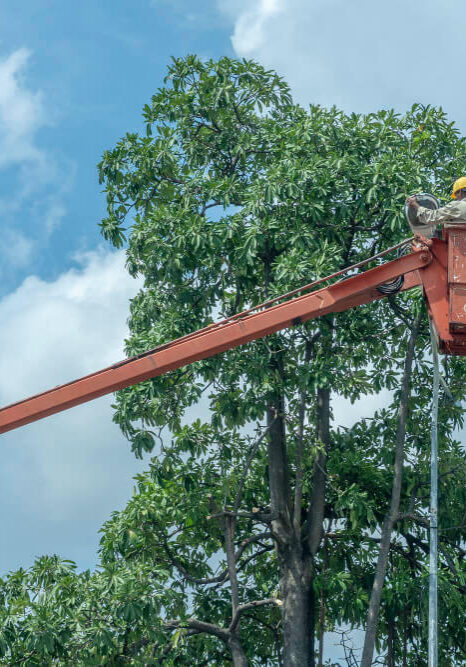
In real jobs, the discussion often starts with a simple request. A branch is scraping a gutter. A truck needs room in a lane. Light levels under a canopy have changed. A limb overhangs a patio where people gather. Yet once the climber or consulting arborist is standing back and reading the whole crown, the issue is rarely just that one branch. There may be competing leaders, poor branch attachment, end weight extending too far from the trunk, or an old wound that changed how the canopy developed. Addressing the symptom without reading the structure is where mediocre work begins.
Structure first, then aesthetics
A crown can be symmetrical and still be poorly structured. It can also look slightly irregular and be entirely appropriate for the species, site, and age of the tree. Good pruning judgment recognizes that the tree’s biology and architecture come before visual neatness.
An experienced crew usually evaluates the crown in layers. First comes the broad frame. Where are the dominant stems? Is the tree carrying excessive weight toward one side? Are there branches that have outgrown their attachment strength or become too elongated relative to support? Then comes the relationship to targets below and around it. Finally, the crew looks at how the cuts can be made without creating a pattern of stub cuts, over-thinning, or crude heading.
This is one reason a Certified Arborist Consultation is worth having before major work is approved. ISA Certified Arborists are trained in the art and science of tree care, must pass a comprehensive exam, continue their education, and follow a code of ethics. That does not mean every tree has one obvious answer. It does mean the recommendations should be grounded in accepted practice rather than guesswork or sales pressure.
A useful consultation often changes the scope of work. A client may assume the tree needs to come down because the crown feels too large or too close to the house. After a proper review, the recommendation may instead be selective reduction, raising, and structural correction. In other cases, the opposite happens. A tree that looks manageable from the ground may present a level of concern that shifts the conversation toward Dangerous Tree Assessment and Removal. Both outcomes are part of responsible service.
Clearance is not just about buildings
Clearance pruning is commonly associated with roofs, siding, gutters, and driveways, but the category is broader than that. A mature canopy can interfere with pedestrian lines of travel, parking access, sightlines at entrances, and routine site maintenance. Commercial properties feel this acutely because the target area beneath the crown is active for long periods. Residential sites are not immune. One low limb over a walk may be trivial until weather, growth, and repeated use make it a liability.
Crown raising is one accepted way to create vertical space, but it requires restraint. If lower branches are removed too aggressively, the canopy can become unbalanced or stripped. If the cuts are hazard tree evaluation poorly chosen, the tree may respond in ways that create future maintenance problems. The goal is not simply to expose trunk. The goal is to create usable clearance while preserving a sound, proportionate crown.
Crown reduction is another common tool when horizontal clearance is the issue. Proper reduction cuts back to an appropriate lateral rather than leaving a blunt end. Directional pruning applies similar logic. Instead of forcing the entire crown backward in one heavy operation, the arborist chooses cuts that redirect growth and relieve conflict more intelligently. This distinction matters. It is the difference between shaping and amputating.
Risk reduction without unnecessary intervention
One of the most useful principles in professional arboriculture is also one of the least appreciated outside the field: there is no completely safe tree. ISA risk guidance makes that clear. Some level of risk must be accepted, and the role of risk assessment is to identify, analyze, and evaluate that risk so that recommendations can reduce it to an acceptable level without unnecessary intervention.
That principle is especially relevant in pruning decisions. Not every overextended branch needs removal. Not every structural defect requires a drastic cut. Not every tree near a house qualifies for Tree Removal Services. The job is to understand the likelihood of failure, the part that could fail, the target below, and the consequence if failure occurs. Then the work can be matched to the problem.
Sometimes selective pruning is the right mitigation. Sometimes structural support is the better move. Tree Cable and Bracing can be part of that conversation because the ISA exam framework includes structural support systems among the treatment concepts arborists are expected to understand. Support systems are not a substitute for pruning, and pruning is not always enough on its own. A weak union, a split-prone stem arrangement, or a canopy with historic loading issues may need both a thoughtful pruning plan and supplemental support.
That is where blanket opinions fall apart. “Just trim it hard” is not a risk management strategy. Neither is “take it down to be safe” without a real assessment. Sound work lives in the middle ground, where reduction, raising, support, or removal are considered according to actual condition and target use.
The importance of proper cuts
Most property owners judge pruning by what they can see from the driveway. Arborists judge it by the cuts.
ISA guidance specifically references proper branch removal and reduction cuts, and warns against topping and stub cuts. That might sound technical, but the practical effect is easy to understand. A proper cut respects how the branch joins the stem and how the tree closes over wounds. A bad cut leaves unnecessary injury, poor form, or a weak regrowth pattern.
This matters even more in crown shaping because the work is distributed across the canopy. A single poor cut is one issue. Dozens of poor cuts repeated through a mature tree create a pattern of stress and dysfunction. The crown may look thinned for the season, but the architecture has been compromised.
On crews that take the work seriously, the visual neatness of the final canopy is almost a side effect of correct technique. The better the cut selection, the more natural the result. The tree still looks like itself, only with improved spacing, less conflict, and better clearance.
When pruning becomes removal
There are cases where pruning can no longer solve the core problem. Sometimes the concern is not branch architecture but overall tree condition. Sometimes the target area is too sensitive and the risk too high. Sometimes prior bad work has created a canopy that cannot be responsibly managed over time.
That is where Dangerous Tree Assessment and Removal enters the picture. Tree risk assessment is a systematic process, not a hunch. It is meant to identify and evaluate risk and then recommend measures that bring that risk to an acceptable level. In some cases, that measure is pruning. In others, it is Tree Removal Services.
Removal is rarely the first preference when a tree can be retained safely, but it should not be treated as a failure either. There are situations where continued pruning only delays an inevitable decision while adding cost and exposure. A responsible arborist says so plainly.
After removal, clients often ask about Stump Removal & Grinding. That service is separate from the crown work itself, but it is often part of the same broader project planning. If the stump affects replanting, site access, grade use, or aesthetics, it makes sense to address it as part of the post-removal scope rather than leaving the site half finished.
Emergency conditions change the pruning conversation
Storm damage and sudden failures bring a different tempo to tree care. Under normal scheduling, a pruning plan can be discussed, revised, and carried out with time to think. After a storm, that luxury may disappear. Branches may be hung up, partially broken, or loaded in unpredictable ways. Access points may be blocked. Structures may Tree Pruning & Crown Shaping already be affected.
That is why Emergency Tree Services are a distinct category of work, not just routine pruning done faster. ISA’s standards framework includes emergency service restoration among the areas addressed by professional guidance. The field conditions justify that distinction. Risk changes when material is under tension, when limbs are suspended, or when the ground situation below is unstable.
In these cases, crown shaping becomes secondary to hazard control. The first objective is to secure the site and remove or reduce immediate danger. Only after that can the tree be evaluated for restoration pruning, structural support, or removal.
A common misunderstanding after storm events is that any damaged tree should be “cleaned out” heavily. That response can make a bad situation worse if it is rushed or indiscriminate. Storm response should still follow sound pruning principles, even when the work must move quickly. Controlled lowering of limbs and careful rigging are often essential. ISA utility-pruning materials include rigging techniques and controlled lowering for good reason. In damaged canopies, how the wood is moved can matter as much as where it is cut.
What a good pruning plan tries to accomplish
The best pruning plans are specific enough to guide the crew, but not so rigid that they ignore what becomes visible once someone is in the tree. In practical terms, a sound plan usually aims to do a few things at once:
- Improve branch structure where defects or imbalances can be corrected
- Provide appropriate clearance for buildings, walkways, access, or site use
- Reduce conflicts without resorting to topping or crude heading cuts
- Preserve as much natural crown form as the objective allows
- Lower risk where pruning is a reasonable mitigation
That balance is what separates professional Tree Pruning & Crown Shaping from generic trimming. The canopy should not just end up smaller. It should end up better organized.
Why certified judgment matters
People often ask whether hiring a certified professional really changes the outcome. In my experience, it changes the questions being asked before the first cut is made.
A non-specialist may focus on what seems convenient from the ground, remove the obvious low limbs, shorten the longest ends, and leave. A trained arborist is more likely to examine the whole structure, the likely response to each cut, the relationship between defect and target, and the possibility that structural support or staged pruning would serve the tree better than a single aggressive visit.
That is the practical value of a Certified Arborist Consultation. It does not guarantee that every tree can be preserved, and it does not eliminate risk. ISA is clear that no tree is completely safe. What it does provide is informed judgment, rooted in training and continuing education, which is exactly what property owners need when the tree in question is large, prominent, or close to something important.
For commercial managers, that judgment is particularly valuable because the decision has to work operationally as well as horticulturally. Clearance over parking, access lanes, and pedestrian areas affects daily use. For homeowners, the emotional side is often stronger. Mature trees are part of the property’s identity. A good arborist knows how to discuss risk and pruning options without turning the conversation into either alarmism or false reassurance.
Fire-prone areas and clearance planning
In some regions, discussions about crown clearance happen alongside broader vegetation management goals. FireSmart Tree Services may be part of that planning. The exact scope depends on the property and local conditions, but the underlying principle is familiar: tree work should be deliberate, not indiscriminate.
That means pruning for clearance should still respect proper cuts and sound structure. Removing limbs without a plan can create fresh maintenance issues or leave a tree with poor form that requires repeated correction. Where wildfire resilience is part of the objective, the same disciplined approach still applies. The work should solve the site problem in front of you without creating another one overhead.
Signs that it is time to call for an assessment
A tree does not have to be visibly failing to justify a professional look. In many cases, the best pruning jobs happen before the site reaches a crisis point. A consultation is worth considering when the crown has begun to interfere with use, when the shape seems increasingly unbalanced, or when previous cuts have left the tree looking harsh and reactive.
The situations that most often deserve a closer review include:
- Branches extending over active roofs, walkways, parking areas, or gathering spaces
- Low limbs reducing visibility, access, or safe movement around the property
- Crowns with obvious asymmetry, overextended ends, or awkward regrowth after past pruning
- Damage after storms, especially where limbs are broken, hung up, or partially attached
- Uncertainty about whether the tree needs pruning, support, or full removal
Each of those conditions can lead to a very different recommendation. That is exactly why assessment should come before action.
Good tree work leaves the tree and the site in a better position
The simplest way to judge crown shaping work is to ask two questions. Did the tree gain functional improvement, and did the site gain usable clearance? If the answer to both is yes, the pruning likely had purpose. If the canopy only looks abruptly smaller, or if the site problem is likely to return quickly because cuts were poorly chosen, the work was probably cosmetic at best.
Professional tree service is broad by nature. It includes pruning, removal, maintenance, and emergency response for residential and commercial clients. Within that broad field, structural pruning and crown shaping remain some of the most nuanced tasks. They require visual judgment, familiarity with accepted pruning methods, respect for risk, and the ability to work safely in a dangerous environment.
When the work is done well, the result rarely calls attention to itself. The crown looks natural. Clearance feels intentional. The tree still belongs to the landscape. That understated outcome is often the clearest sign that the arborist got it right.
Name: Ace Tree Services Ltd.
Address: 4656 Wallace Hill Road, Kelowna, BC
Phone: 250-212-9593
Website: https://acetree.ca/
Hours:
Monday: 7:00 AM–5:00 PM
Tuesday: 7:00 AM–5:00 PM
Wednesday: 7:00 AM–5:00 PM
Thursday: 7:00 AM–5:00 PM
Friday: 7:00 AM–5:00 PM
Saturday: 7:00 AM–5:00 PM
Sunday: Closed
Emergency tree services: 24/7 emergency service is listed.
Open-location code / Plus code: RHF8+8G Kelowna, British Columbia, Canada
Map/listing URL: https://www.google.com/maps/place/Ace+Tree+Services+Ltd./@49.8232606,-119.4337283,563m/data=!3m1!1e3!4m6!3m5!1s0x537d8b1d074815c5:0x450b88afa7a41435!8m2!3d49.8232606!4d-119.4337283!16s%2Fg%2F11ydkpnh22
Embed iframe:
Socials: https://www.facebook.com/people/Ace-Tree-Services/61585901931447/
https://m.yelp.com/biz/ace-tree-services-kelowna
Ace Tree Services Ltd. provides professional tree service for residential, commercial, and municipal customers in Kelowna and across the Okanagan Valley.
The company’s listed services include tree removal, stump removal and grinding, tree pruning and crown shaping, emergency tree services, certified arborist consultation, dangerous tree assessment, tree cable and bracing, and wildfire mitigation.
Ace Tree Services works with homeowners, businesses, property managers, and public-sector clients that need safe, practical tree care in the Kelowna area.
The official site highlights ISA-certified arborists, insurance, and experience handling both routine and complex tree service situations.
Customers can contact Ace Tree Services for tree care planning, hazard concerns, emergency tree cleanup, pruning needs, stump grinding, or advice about trees near homes, fences, driveways, and landscaping.
Ace Tree Services lists regular work hours from 7:00 AM to 5:00 PM Monday through Friday, with 24/7 emergency tree service available for urgent situations.
For tree service in Kelowna, call 250-212-9593 or visit https://acetree.ca/
The public map listing places Ace Tree Services Ltd. in Kelowna and can help customers find directions to the Wallace Hill Road area.
Popular Questions About Ace Tree Services Ltd.
What services does Ace Tree Services Ltd. provide?
Ace Tree Services Ltd. provides tree removal, stump removal and grinding, tree pruning and crown shaping, emergency tree services, certified arborist consultation, dangerous tree assessment and removal, tree cable and bracing, and wildfire mitigation.
Where is Ace Tree Services Ltd. located?
The official website lists Ace Tree Services Ltd. at 4656 Wallace Hill Road, Kelowna, BC.
What areas does Ace Tree Services Ltd. serve?
The official website describes Ace Tree Services as located in Kelowna and servicing the Okanagan.
What phone number should customers call?
Customers can call Ace Tree Services Ltd. at 250-212-9593.
What are Ace Tree Services Ltd.’s regular hours?
The official website lists work hours as 7:00 AM to 5:00 PM, Monday through Friday. Saturday and Sunday regular hours are not listed and should be confirmed directly.
Does Ace Tree Services Ltd. offer emergency tree service?
Yes. The official website lists 24/7 emergency services for urgent tree situations, including emergency tree removal, dangerous tree assessment, stabilization, and limb or branch cleanup.
Does Ace Tree Services Ltd. have certified arborists?
Yes. The official website states that Ace Tree Services has ISA-certified arborists.
Can Ace Tree Services Ltd. help with wildfire mitigation?
Yes. Wildfire mitigation is listed as one of the company’s tree services.
How do I contact Ace Tree Services Ltd.?
Call 250-212-9593 or visit https://acetree.ca/.
Landmarks Near Kelowna, BC
Wallace Hill Road: A local Kelowna road near the address listed for Ace Tree Services Ltd.
Okanagan Lake: A major Kelowna landmark near residential, commercial, and waterfront properties that may need tree pruning, removal, or hazard assessment.
Downtown Kelowna: A central area with homes, offices, rental properties, restaurants, and commercial sites that may need professional tree care.
Mission / Lower Mission: A well-known Kelowna area with mature landscaping, residential properties, and lake-adjacent homes.
South East Kelowna: A rural and residential area with larger properties, orchards, and tree-care needs that can include pruning, removals, and wildfire mitigation.
Crawford: A residential area near the southeast side of Kelowna where homeowners may need tree trimming, hazard assessment, and stump grinding.
Kettle Valley: A hillside residential neighborhood where tree condition, slope, wind exposure, and defensible-space planning can matter for property owners.
Myra-Bellevue Provincial Park: A major outdoor landmark near southeast Kelowna and a useful point of orientation for nearby properties.
Gallagher’s Canyon: A residential and golf community near southeast Kelowna where tree maintenance and wildfire-conscious vegetation management can be practical concerns.
Orchard Park Shopping Centre: A major central Kelowna retail landmark and reference point for customers traveling across the city.
Highway 97: A major Kelowna corridor connecting neighborhoods, commercial properties, and service routes throughout the region.
Kelowna City Park: A recognizable central landmark near downtown neighborhoods and lakefront properties.
Glenmore: A Kelowna neighborhood with residential and commercial properties that may need pruning, storm cleanup, and general tree care.
Rutland: A large residential and commercial area where customers may need tree removal, pruning, stump grinding, or arborist consultation.
Black Mountain: A hillside community where slope, wind, wildfire exposure, and access can influence tree service planning.
For tree service near these Kelowna landmarks, contact Ace Tree Services Ltd. at 250-212-9593 or visit https://acetree.ca/