Tree Pruning & Crown Shaping With Proper Reduction Cuts
A well-pruned tree rarely looks freshly pruned. That is one of the first things I tell property owners who expect a dramatic change after a day of climbing, rigging, and careful cutting. Good Tree Pruning & Crown Shaping should leave a tree looking balanced, natural, and healthier in structure, not stripped, butchered, or forced into an artificial outline.
That subtle result depends on judgment more than force. It also depends on knowing when to reduce, when to remove, and when to leave a branch alone. Proper reduction cuts sit at the center of that judgment. They allow arborists to shorten selected limbs while preserving the tree’s form and reducing stress better than blunt heading cuts or topping ever could.
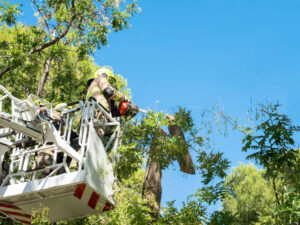
This matters for aesthetics, but it matters even more for long-term tree stability, risk reduction, and maintenance planning. In the field, I have seen two neighboring trees of the same species and similar age respond very differently after pruning. The one that received selective reduction and thoughtful crown shaping continued to develop a strong, workable canopy. The one that was topped in the name of “size control” pushed out weak regrowth, needed repeated corrective work, and became more expensive to manage over time.
What a proper reduction cut actually does
A reduction cut shortens a branch by cutting it back to a lateral branch that can assume the terminal role. That phrase sounds technical, but the practical meaning is simple. You are not just chopping a limb to a random point. You are redirecting growth to a side branch that is already part of the tree’s structure.
That distinction separates professional pruning from damage disguised as maintenance.
When a branch is reduced properly, the cut works with the tree’s natural architecture. The remaining lateral branch continues growth, the canopy line stays more natural, and the wound is generally more defensible than a stub left hanging out in space. Improper cuts, especially stub cuts and topping cuts, interrupt the tree’s form and often trigger vigorous but poorly attached regrowth. That kind of regrowth may look like recovery at first, but structurally it can create a future problem.
Crown shaping often relies on this exact principle. If a tree has overextended toward a driveway, roofline, service area, or neighboring crown, a reduction cut can draw that canopy edge back without leaving a flat, hacked profile. A shaped crown should still look like that species. A maple should not end up looking like a hat rack. A conifer should not be “rounded over” just because it is close to a structure.
Why crown shaping is more than cosmetic
People often request shaping because they want a neater appearance, and there is nothing wrong with that. Trees are part of the landscape, and visual balance matters. But crown shaping is not simply decorative. It can serve a practical purpose when handled correctly.
A well-shaped crown can improve clearance, reduce end weight on overextended limbs, and help distribute the canopy more evenly. In some cases, shaping supports broader management goals identified during a Certified Arborist Consultation. If a tree has asymmetrical growth, old storm damage, or branch unions residential tree removal services that deserve monitoring, pruning may be part of a larger plan that includes observation, later maintenance, or structural support such as Tree Cable and Bracing.
It is important to say what crown shaping is not. It is not routine lion-tailing. It is not stripping interior growth to force all foliage to the tips. It is not a shortcut for avoiding difficult decisions about tree placement, species suitability, or structural defects. And it is not a replacement for Dangerous Tree Assessment and Removal when a tree’s condition falls outside what pruning can responsibly address.
That last point matters. Arborists are trained to assess and reduce risk, but risk cannot be reduced to zero. There is no completely safe tree. The goal is not perfection. The goal is reasonable risk management, sound structure, and defensible recommendations.
Reading the tree before making the first cut
Every proper reduction cut starts before the saw even comes out. The first step is reading the tree.
I look at species, age class, growth habit, branch arrangement, canopy density, defects I can see from the ground, and the site around the tree. I want to understand what the client wants, but I also want to understand what the tree can tolerate and what the structure will allow. The same request, “Can you bring this canopy down?” can have three different answers depending on the tree in front of me.
A mature tree with a broad natural spread may respond well to selective crown reduction. A tree already stressed by poor past pruning may need very light corrective work or none at all. A storm-damaged tree leaning over a target might move quickly from a pruning conversation to Emergency Tree Services or a recommendation for Tree Removal Services.
The pre-pruning assessment also helps identify whether the real issue is branch length, structural weakness, root conflict, storm damage, or site use. Homeowners are often relieved to hear that not every concern requires removal. Just as often, they are surprised to learn that not every tree can be “fixed” with a haircut.
The difference between reduction and topping
This is where many pruning conversations go sideways. A client asks for a tree to be made smaller. A poorly trained crew hears, “Take the top off.” That is not reduction. That is topping.
Topping removes stems and branches back to stubs or to laterals too small to assume the terminal role. The immediate result is obvious size reduction, which is why the practice remains tempting. The long-term result is usually poor structure, large wounds, disfigured form, and repeated maintenance needs. It can also create more concern later when vigorous shoots emerge from inappropriate points and grow fast without strong attachment.
Proper reduction, by contrast, is selective. It asks where growth can be redirected while preserving a branch line that still makes biological and structural sense. It takes longer. It requires more judgment. It rarely produces the dramatic “before and after” some people expect. Yet in most cases, it is the better answer when the goal is size management without abandoning tree form.
I have had clients call one year after a selective reduction and say, “At first I wondered why you didn’t take more off. Now I understand why it looks right.” That delayed appreciation is common. Good pruning tends to age well.
Where proper reduction cuts are especially useful
Reduction cuts become especially valuable when a tree has outgrown available space but still has enough structural integrity and vitality to justify retention. A branch over a roof, a limb extending toward a driveway, or a side of the canopy crowding a neighboring tree may all be candidates for selective reduction.
They are also useful in post-storm corrective work, assuming the tree remains a good candidate for retention. After wind or snow loading, it is not unusual to find a canopy with one side stretched, broken, or imbalanced. Pruning can help re-establish a more stable form, though the tree’s defects, targets, and ongoing risk all need to be evaluated realistically.
In some landscapes, reduction work is part of a broader FireSmart Tree Services strategy. That does not mean hacking canopies indiscriminately. It means making thoughtful spacing and fuel-management decisions while preserving tree health and structure where possible. Crown work in these settings should still respect sound pruning practice. Fire concerns do not turn bad cuts into good ones.
The branch collar, the lateral branch, and the discipline of restraint
One of the simplest ways to recognize skilled pruning is by looking at what was left behind. Were cuts made cleanly at appropriate points, or is the tree full of stubs, torn bark, and randomly shortened limbs? The anatomy matters.
A good cut respects the natural structure of the branch being removed or reduced. That means understanding where the branch should be cut in relation to its attachment and, in the case of reduction, whether the remaining lateral branch is substantial enough to carry on.
This is the part that demands restraint. Not every branch that feels inconvenient should be shortened. Not every heavy limb can be reduced enough to satisfy a clearance request without leaving the tree disfigured or over-stressed. The disciplined answer is sometimes, “We can reduce this amount responsibly, but not more,” or, “This tree is no longer a good fit for this space.”
That kind of honesty is part of professional tree care. It is also one reason a Certified Arborist Consultation has value before major work begins. The goal is not simply to perform cuts. It is to recommend the right treatment, which may include pruning, monitoring, support systems, or removal.
How much is too much
There is no universal percentage that solves every pruning decision in every context. Species, age, condition, past pruning history, and site stress all affect tolerance. That is why rigid formulas can be misleading when they are presented without context.
What I can say from practice is that over-pruning often starts with impatience. Someone wants a tree dramatically smaller by the end of the day. The crew tries to satisfy the request in one visit. Tree Pruning & Crown Shaping The result is a canopy that may be technically lighter but biologically and structurally compromised.
Selective reduction works best when the goal is realistic. A mature tree that has completely outgrown its space may not be a candidate for perpetual pruning just to avoid a difficult conversation about replacement. In those cases, repeated hard reduction can become a cycle of decline and expense. A more defensible recommendation may be phased replacement through Tree Removal Services, followed by stump work through Stump Removal & Grinding if the site is being replanted or repurposed.
That may sound less appealing in the short term, but it is often better than forcing a tree to live as a problem indefinitely.
The role of risk assessment in pruning decisions
Not every pruning job begins with a safety concern, but every pruning job should involve some level of risk awareness. Arborists are trained to identify, analyze, and evaluate tree risk in a systematic way and recommend measures that achieve an acceptable level of risk. The key phrase there is acceptable level. Trees are living structures, not manufactured products. Some degree of risk always exists.
This matters when discussing long limbs, included bark, old storm injury, or defect-prone architecture. A reduction cut can lower load and shorten lever arms on selected branches, which may be part of a risk-mitigation strategy. In some cases, structural support systems such as Tree Cable and Bracing may also be considered. In others, reduction may not be enough.
A canopy can look full and green while hiding serious structural concerns. I have seen trees with decent leaf color and obvious mechanical weakness once you got into the crown. That is why visual appearance alone should not drive the decision. If a limb hangs over a home, a play area, or a busy access route, the consequences of failure matter as much as the tree’s aesthetics.
When defects are significant, the conversation may shift from pruning to Dangerous Tree Assessment and Removal. That does not mean removal is always the answer. It means the tree deserves an honest evaluation, not wishful thinking.
Why emergency work is different
Storm response changes the pacing and, often, the priority list. In Emergency Tree Services, the first concerns are access, immediate hazards, and stabilization. A shattered limb over a driveway, a partially failed leader caught in the crown, or a split stem above a structure creates a very different job than routine shaping on a calm Tuesday morning.
Emergency pruning still requires sound cuts, but the circumstances are more complex. Broken wood may need controlled lowering. Access may be compromised. Tension and compression forces can make damaged limbs unpredictable. This is exactly why large-tree pruning and removal should be handled by trained professionals equipped to work safely in trees.
Once immediate hazards are addressed, the tree still needs a measured follow-up assessment. Some storm-damaged trees recover well with corrective pruning. Others reveal hidden instability, root problems, or structural failures that make retention hard to justify. That second look is where professional judgment earns its keep.
Common signs that a tree may need professional evaluation
The following situations often justify bringing in an arborist rather than relying on guesswork:
- Long, overextended limbs with heavy end weight
- Previous topping or obvious stub cuts
- Storm-damaged branches, cracked unions, or hanging wood
- A canopy growing into structures, access routes, or other target areas
- Questions about whether pruning, support, or removal is the safer option
These are not automatic removal triggers. They are indicators that the tree deserves a closer look.
Pruning, support, or removal, choosing the right tool
Tree care is not a one-service business, even if many people first call for “trimming.” Sometimes the answer is straightforward crown shaping. Sometimes selective reduction should be paired with monitoring. Sometimes a tree benefits from Tree Cable and Bracing to help support specific structural weaknesses as part of a broader management plan. And sometimes pruning has reached the point of diminishing returns.
That last scenario tends to happen when owners try to solve a site mismatch through repeated canopy reduction. If a large-maturing tree sits directly under constraints that will never change, heavy pruning every few years can become a costly compromise with poor long-term value. In those cases, Tree Removal Services may be the more responsible option, especially when the tree’s condition or defect profile adds risk.
After removal, Stump Removal & Grinding often becomes part of the conversation if the area needs to be regraded, replanted, paved, or simply restored to usable space. These services are connected in practice because pruning decisions do not happen in a vacuum. They belong to a whole property management plan.
What clients can expect from a thoughtful pruning visit
A professional pruning visit should not feel like a race to remove as much material as possible. It should feel deliberate. The crew should have a clear objective, whether that is crown reduction, crown cleaning, selective shaping, hazard mitigation, or post-storm correction.
On a well-run job, the tree is assessed from the ground, then reassessed aloft as the structure becomes clearer. Cuts are chosen, not sprayed around indiscriminately. Limbs are managed carefully, especially over structures or planting beds. If large wood must be lowered in sections, it is done in a controlled way. And if the tree reveals defects that change the original plan, that should be communicated rather than ignored.
This is one reason homeowners and property managers benefit from asking for a Certified Arborist Consultation when the stakes are high. Certification does not make every decision automatic, but it does mean the arborist has met a recognized benchmark in the art and science of tree care, continues education, and works under a professional code of ethics. That matters when the choices are nuanced.
Questions worth asking before pruning begins
If you are hiring out pruning work, a short conversation up front can prevent years of regret. Ask what the pruning objective is, how size reduction will be achieved, and whether the tree is actually a good candidate for it. If the proposal sounds like “we’ll just top it and it will fill back in,” that is a warning sign.
A better discussion usually covers points like these:
- Which branches are being reduced and why
- Whether the tree’s natural shape can be preserved
- Whether any defects change the recommendation
- Whether future maintenance will likely be needed
- Whether pruning is being chosen instead of removal for sound reasons
Those questions are simple, but they reveal a lot about the quality of the work being proposed.
FireSmart considerations without bad pruning habits
In regions where wildfire planning matters, clients sometimes assume every tree should be aggressively thinned or lifted. The reality is more selective. FireSmart Tree Services should still respect species form, branch structure, and the tree’s ability to respond to pruning.
Good fuel management does not require random stubbing, flush cuts, or over-thinning. It requires strategic thinking about spacing, ladder fuels, site use, and maintenance priorities. In practice, that may mean selective pruning, removal of unsuitable material, and occasional tree removal where risk or placement justifies it. The principles of proper reduction do not disappear because the management goal has changed.
The best crown shaping is often the least obvious
When crown shaping is done well, most people notice that the tree looks better but cannot immediately explain why. The canopy sits more comfortably in its space. The outline is cleaner. The weight distribution makes more sense. Nothing screams “freshly hacked.”
That subtlety is the whole point.
Proper reduction cuts let arborists reshape trees with respect for how they grow. They support clearance needs, appearance, and in some cases risk reduction, without turning living structure into repeated repair work. They are not magic, and they cannot solve every problem. Some trees need support systems. Some need monitoring. Some need Dangerous Tree Assessment and Removal. Some become emergency calls after storms. Good arboriculture includes all of those realities.
But when a tree is a sound candidate for pruning, careful reduction and crown shaping remain some of the most valuable tools we have. They ask for patience, technical skill, and restraint. And unlike quick, dramatic cutting, they reward that discipline years later, when the tree still looks like itself, only better managed, safer, and better suited to the place it grows.
Name: Ace Tree Services Ltd.
Address: 4656 Wallace Hill Road, Kelowna, BC
Phone: 250-212-9593
Website: https://acetree.ca/
Hours:
Monday: 7:00 AM–5:00 PM
Tuesday: 7:00 AM–5:00 PM
Wednesday: 7:00 AM–5:00 PM
Thursday: 7:00 AM–5:00 PM
Friday: 7:00 AM–5:00 PM
Saturday: 7:00 AM–5:00 PM
Sunday: Closed
Emergency tree services: 24/7 emergency service is listed.
Open-location code / Plus code: RHF8+8G Kelowna, British Columbia, Canada
Map/listing URL: https://www.google.com/maps/place/Ace+Tree+Services+Ltd./@49.8232606,-119.4337283,563m/data=!3m1!1e3!4m6!3m5!1s0x537d8b1d074815c5:0x450b88afa7a41435!8m2!3d49.8232606!4d-119.4337283!16s%2Fg%2F11ydkpnh22
Embed iframe:
Socials: https://www.facebook.com/people/Ace-Tree-Services/61585901931447/
https://m.yelp.com/biz/ace-tree-services-kelowna
Ace Tree Services Ltd. provides professional tree service for residential, commercial, and municipal customers in Kelowna and across the Okanagan Valley.
The company’s listed services include tree removal, stump removal and grinding, tree pruning and crown shaping, emergency tree services, certified arborist consultation, dangerous tree assessment, tree cable and bracing, and wildfire mitigation.
Ace Tree Services works with homeowners, businesses, property managers, and public-sector clients that need safe, practical tree care in the Kelowna area.
The official site highlights ISA-certified arborists, insurance, and experience handling both routine and complex tree service situations.
Customers can contact Ace Tree Services for tree care planning, hazard concerns, emergency tree cleanup, pruning needs, stump grinding, or advice about trees near homes, fences, driveways, and landscaping.
Ace Tree Services lists regular work hours from 7:00 AM to 5:00 PM Monday through Friday, with 24/7 emergency tree service available for urgent situations.
For tree service in Kelowna, call 250-212-9593 or visit https://acetree.ca/
The public map listing places Ace Tree Services Ltd. in Kelowna and can help customers find directions to the Wallace Hill Road area.
Popular Questions About Ace Tree Services Ltd.
What services does Ace Tree Services Ltd. provide?
Ace Tree Services Ltd. provides tree removal, stump removal and grinding, tree pruning and crown shaping, emergency tree services, certified arborist consultation, dangerous tree assessment and removal, tree cable and bracing, and wildfire mitigation.
Where is Ace Tree Services Ltd. located?
The official website lists Ace Tree Services Ltd. at 4656 Wallace Hill Road, Kelowna, BC.
What areas does Ace Tree Services Ltd. serve?
The official website describes Ace Tree Services as located in Kelowna and servicing the Okanagan.
What phone number should customers call?
Customers can call Ace Tree Services Ltd. at 250-212-9593.
What are Ace Tree Services Ltd.’s regular hours?
The official website lists work hours as 7:00 AM to 5:00 PM, Monday through Friday. Saturday and Sunday regular hours are not listed and should be confirmed directly.
Does Ace Tree Services Ltd. offer emergency tree service?
Yes. The official website lists 24/7 emergency services for urgent tree situations, including emergency tree removal, dangerous tree assessment, stabilization, and limb or branch cleanup.
Does Ace Tree Services Ltd. have certified arborists?
Yes. The official website states that Ace Tree Services has ISA-certified arborists.
Can Ace Tree Services Ltd. help with wildfire mitigation?
Yes. Wildfire mitigation is listed as one of the company’s tree services.
How do I contact Ace Tree Services Ltd.?
Call 250-212-9593 or visit https://acetree.ca/.
Landmarks Near Kelowna, BC
Wallace Hill Road: A local Kelowna road near the address listed for Ace Tree Services Ltd.
Okanagan Lake: A major Kelowna landmark near residential, commercial, and waterfront properties that may need tree pruning, removal, or hazard assessment.
Downtown Kelowna: A central area with homes, offices, rental properties, restaurants, and commercial sites that may need professional tree care.
Mission / Lower Mission: A well-known Kelowna area with mature landscaping, residential properties, and lake-adjacent homes.
South East Kelowna: A rural and residential area with larger properties, orchards, and tree-care needs that can include pruning, removals, and wildfire mitigation.
Crawford: A residential area near the southeast side of Kelowna where homeowners may need tree trimming, hazard assessment, and stump grinding.
Kettle Valley: A hillside residential neighborhood where tree condition, slope, wind exposure, and defensible-space planning can matter for property owners.
Myra-Bellevue Provincial Park: A major outdoor landmark near southeast Kelowna and a useful point of orientation for nearby properties.
Gallagher’s Canyon: A residential and golf community near southeast Kelowna where tree maintenance and wildfire-conscious vegetation management can be practical concerns.
Orchard Park Shopping Centre: A major central Kelowna retail landmark and reference point for customers traveling across the city.
Highway 97: A major Kelowna corridor connecting neighborhoods, commercial properties, and service routes throughout the region.
Kelowna City Park: A recognizable central landmark near downtown neighborhoods and lakefront properties.
Glenmore: A Kelowna neighborhood with residential and commercial properties that may need pruning, storm cleanup, and general tree care.
Rutland: A large residential and commercial area where customers may need tree removal, pruning, stump grinding, or arborist consultation.
Black Mountain: A hillside community where slope, wind, wildfire exposure, and access can influence tree service planning.
For tree service near these Kelowna landmarks, contact Ace Tree Services Ltd. at 250-212-9593 or visit https://acetree.ca/