Tree Removal Services and the Real Hazards of Large Tree Work
Large tree work has a way of looking simpler from the ground than it is in practice. A mature tree can seem still, solid, and predictable until someone has to climb into it, prune over a roofline, lower heavy wood in sections, or assess whether a cracked stem can be made safer or needs to come down. That is where the public picture of tree work, a chainsaw, a truck, a pile of brush, breaks apart. Real tree care is technical work. It involves judgment, training, controlled cutting, and a constant awareness that gravity rarely forgives mistakes.
That matters because Tree Removal Services are often called in at exactly the moment when a property owner is under pressure. A storm has shifted a tree toward the house. A major limb is hanging. A trunk has visible damage. Roots may be compromised, or the canopy may have changed in a way that makes people uneasy. In those moments, the temptation is to think only in terms of speed. The better question is whether the work is being approached by people trained and equipped to handle it safely.
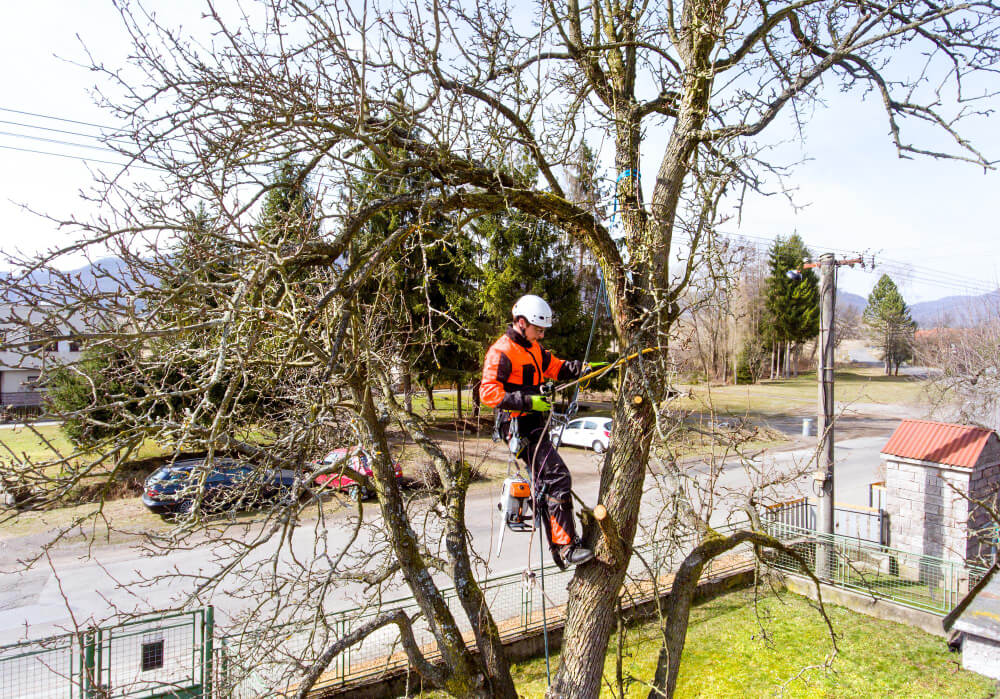
Industry guidance is clear on this point. Pruning and removal, especially on large trees, can be dangerous work and should be done by trained professionals using proper equipment and safe work practices. That point is easy to repeat and easy to ignore. It becomes much harder to ignore when you understand where the real hazards come from.
Why large tree work is inherently high risk
The danger does not come from one thing. It comes from the way several factors compound one another. Height changes every movement. Weight changes every cut. Tension and compression inside wood can make pieces react suddenly. A branch that appears stable from below may shift the instant another limb is removed nearby. The work zone is rarely clean or simple. There may be fences, sheds, sidewalks, utility space, parked vehicles, or a narrow access route that prevents easy equipment setup.
On top of that, trees are living structures, not uniform building materials. Two branches of similar size can behave very differently under the saw. One stem may be sound. Another may be decayed internally. One canopy may allow straightforward rigging. Another may be poorly structured and offer fewer predictable tie-in or lowering options. These are not small distinctions. They shape whether the job calls for pruning, structural support, staged removal, or a recommendation to leave the tree in place and monitor it.
This is why Dangerous Tree Assessment and Removal is not a matter of guesswork. Risk assessment in arboriculture is a systematic process. The point is to identify the concern, analyze the level of risk, evaluate what can be done, and recommend measures that reduce risk to an acceptable level. That last phrase matters. There is no completely safe tree. Some level of risk exists with any tree, simply because trees are large living organisms exposed to weather, age, and change over time. Good arboricultural judgment is not about promising zero risk. It is about reducing unnecessary risk without pushing toward unnecessary intervention.
What separates a trained arborist from a general cutter
A lot of property owners use the word “tree service” as if every company offers the same level Tree Pruning & Crown Shaping of expertise. They do not. The distinction between a crew that can cut wood and a crew that understands tree biology, structure, pruning standards, and risk is substantial.
A Certified Arborist Consultation brings that distinction into focus. ISA Certified Arborists are trained in the art and science of tree care. They have passed a comprehensive exam, they maintain continuing education, and they are expected to follow a code of ethics. That does not mean every tree can be saved, and it does not mean every recommendation will be the same from one arborist to another. It does mean the assessment is grounded in a recognized body of knowledge rather than impulse or convenience.
That difference shows up early. A trained arborist is less likely to jump straight from “something looks wrong” to “take it down.” In many cases, risk can be reduced through Tree Pruning & Crown Shaping, selective reduction, or a structural support system such as Tree Cable and Bracing. In other cases, removal is the responsible call because the defects, condition, or targets around the tree make retention unreasonable. Both outcomes can be correct. What Click to find out more matters is how the decision is made.
The hidden complexity of pruning versus removal
People often assume pruning is the lighter, easier job and removal is the hard one. In some respects that is true. Removal is final, and taking apart a large tree over developed property requires careful planning and controlled lowering. But pruning can be every bit as technical because the goal is not simply to remove weight. The goal is to improve structure, clearance, or risk profile without creating new problems.
Proper pruning relies on correct cuts and a clear purpose. Industry guidance recognizes practices such as crown reduction, directional pruning, and crown raising, while warning against poor techniques like topping or leaving stubs. That distinction matters because bad cuts do not just look rough. They can alter structure, create weak regrowth, and undermine the long-term benefit of the work.
Tree Pruning & Crown Shaping also requires restraint. It is possible to remove too much. It is possible to create imbalance. It is possible to solve one concern, such as branch clearance, while introducing another, such as excessive end weight on a remaining scaffold limb. Skilled pruning is not a volume exercise. It is a structural conversation with the tree.
There is also a common property-owner misconception that a tree must look dramatically smaller after pruning for the work to be worthwhile. Often the best pruning job is not the most obvious one from the driveway. The best job may be the one that slightly reduces a defect load, improves clearance, removes dead or compromised material, and preserves the tree’s natural form.
When removal is the right answer
For all the value of preservation, some trees do need to be removed. The reasons can vary. The tree may present an unacceptable level of risk. Damage may be severe. Structural defects may make mitigation unreliable. Site conditions may leave too little room for the tree to fail safely. A partially failed tree after a storm may also move a situation from routine care into Emergency Tree Services territory.
Large-tree removals tend to be the jobs that expose the public to the true hazard of the trade. The tree is often dismantled in sections. Wood may need to be rigged and lowered in a controlled way rather than dropped freely. Workers must think several moves ahead. The order of cuts matters. The path of every piece matters. The ability to adapt matters most when the tree is damaged, leaning, or holding broken limbs under tension.
This is one reason emergency jobs deserve special caution. A tree that has already failed in part is rarely more predictable than a standing tree in calm conditions. It is often less predictable. Storm-damaged trees can hold forces that are not obvious from the ground. The urgency of cleanup can tempt rushed decisions, yet the job may actually demand slower judgment. Emergency Tree Services are not just regular tree work done faster. They require experience in unstable conditions and the discipline to control a chaotic scene.
Risk assessment is not fear, it is method
One of the most useful ideas in modern arboriculture is that risk should be assessed systematically rather than emotionally. People tend to evaluate trees through a mixture of familiarity and recent events. A tree that has stood for decades feels safe because it is familiar. A tree that drops a single limb after a storm suddenly feels dangerous because it has become vivid. Neither reaction, by itself, is a reliable assessment.
Certified arborists use a more disciplined framework. They look at the tree, the observed defects or condition, the likelihood of failure, what the tree could hit if it fails, and what practical options exist to reduce risk. That may lead to pruning. It may lead to support systems. It may lead to monitoring. It may lead to Dangerous Tree Assessment and Removal. The important thing is that the recommendation should fit the actual level of concern, not just the owner’s immediate anxiety.
This approach also helps property owners understand a difficult truth. Not every defect means a tree is doomed, and not every large healthy-looking tree is automatically low risk. Arboricultural judgment lives in the middle ground. It weighs condition, site use, structure, and management options.
Tree cable and bracing, when support makes sense
Some trees can benefit from structural support systems. Tree Cable and Bracing is part of the broader set of mitigation tools recognized in arboriculture, alongside pruning and other management responses. The basic purpose is not cosmetic. It is to help reduce the likelihood of certain structural failures in trees where support is appropriate.
The decision to install support systems should not be casual. A cable or brace is not a universal fix, and it does not erase all risk. It may be part of a plan to retain a valued tree while addressing a structural weakness or concern. It may also be paired with pruning to reduce loading or improve branch distribution. In the wrong situation, however, support can give false confidence if the underlying condition calls for a different response.
That is another place where a Certified Arborist Consultation adds value. Support systems only make sense when the tree, the defect, and the site justify them. If they are used, they should be part of a broader management decision, not a shortcut around proper assessment.
The work does not end when the tree is down
Property owners often focus on the moment the trunk hits the ground, or more accurately, the point when the last section has been safely lowered and removed. From an operations standpoint, that is only part of the job. Site restoration and what remains below grade matter too.
Stump Removal & Grinding enters the conversation here. Some owners want the stump left in place for budget or landscape reasons. Others want it removed or ground to reclaim space, reduce the obstacle, or prepare for future use of the area. The right choice depends on the site, access, and the owner’s plans. Even this stage requires practical thinking because the work after felling can affect how cleanly the property returns to normal use.
What often gets overlooked is that the safest and most professional tree job is not judged only by whether the tree came down. It is judged by whether the full operation, assessment, cutting plan, material handling, and cleanup, was managed in a way that matched the site’s risks from start to finish.
Fire exposure changes the conversation
In some regions and properties, wildfire risk influences tree care decisions in a very practical way. FireSmart Tree Services fit into that context. The aim is not simply to remove trees aggressively. It is to manage vegetation and structure around the property in a way that supports a safer overall landscape profile.
This can overlap with pruning, selective removal, and general maintenance. It can also create tension with owners who value privacy screens, dense cover, or the look of heavily treed lots. Good fire-conscious tree work usually involves those trade-offs. The answer is rarely “remove everything,” and it is rarely “leave everything because it looks healthy.” It is a matter of making targeted decisions about spacing, structure, and management priorities within the realities of the site.
Again, this is where arboricultural judgment matters. Trees are assets. In the wrong arrangement or condition, they can also amplify risk. Responsible service is about balancing both truths.
What a property owner should ask before approving large tree work
When people are comparing providers, price tends to dominate the conversation. That is understandable, especially if the tree problem appeared suddenly. But large tree work is one of those services where a low number can hide expensive shortcuts. The more useful questions are about training, assessment, and the method of work.
A short list of practical questions can help:
- Is the tree being assessed by someone qualified in arboriculture, such as through a Certified Arborist Consultation?
- Is the recommendation based on pruning, support, monitoring, or removal, and why is that option preferred?
- If the tree is large or damaged, how will the material be controlled during the work?
- Is stump treatment part of the scope, whether that means leaving it, or arranging Stump Removal & Grinding?
- If the tree has storm damage or instability, is this being handled as part of Emergency Tree Services with the necessary caution?
Those questions do not turn an owner into an arborist, but they do change the conversation. They shift it from “How fast can you cut it?” to “How are you thinking about risk?”
Why the simplest-looking jobs can be deceptive
Some of the most deceptively hazardous jobs are not always the most dramatic. A homeowner may point to a single heavy lateral over the driveway and say it is just one branch. In practice, that one branch may require careful rigging, precise cuts, and a plan for controlled lowering because there is no acceptable drop zone. Another owner may ask for a tree to be “shaped up a bit,” not realizing that proper Tree Pruning & Crown Shaping calls for selective decisions, not broad shearing or topping.
This gap between appearance and reality is where accidents tend to begin. The work looks manageable. The branch looks reachable. The tree feels familiar because it has stood there for years. Yet arboriculture is full of situations where familiarity obscures hazard. Trained crews are valuable not because they make the work look dramatic, but because they recognize what can go wrong before it does.
The real value of professional tree service
The public often sees the visible result, a cleaner canopy, an open yard, a removed hazard, a stump gone, storm damage cleared. The deeper value is in the decisions that prevented a bad outcome during the work and reduced the right risks afterward. Tree service is maintenance, pruning, removal, and emergency response, but at its best it is also disciplined judgment applied to living structures that can fail in complex ways.
That is the real story behind Tree Removal Services and the broader world of arboriculture. Large tree work is not routine just because it is common. It is common because trees grow where people live and build, and sooner or later the needs of the tree and the needs of the site have to be reconciled. Sometimes that means preservation through pruning. Sometimes it means support through Tree Cable and Bracing. Sometimes it means FireSmart Tree Services. Sometimes it means Emergency Tree Services after weather changes everything in an afternoon. And sometimes it means Dangerous Tree Assessment and Removal because the risk has crossed a line that should not be ignored.
A sound decision in tree care is rarely the loudest one. It is usually the one that accounts for biology, structure, targets, work methods, and the uncomfortable fact that no large-tree operation is trivial. When that understanding guides the job, the result is not just a tree cut or saved. It is a property made safer through professional judgment.
Name: Ace Tree Services Ltd.
Address: 4656 Wallace Hill Road, Kelowna, BC
Phone: 250-212-9593
Website: https://acetree.ca/
Hours:
Monday: 7:00 AM–5:00 PM
Tuesday: 7:00 AM–5:00 PM
Wednesday: 7:00 AM–5:00 PM
Thursday: 7:00 AM–5:00 PM
Friday: 7:00 AM–5:00 PM
Saturday: 7:00 AM–5:00 PM
Sunday: Closed
Emergency tree services: 24/7 emergency service is listed.
Open-location code / Plus code: RHF8+8G Kelowna, British Columbia, Canada
Map/listing URL: https://www.google.com/maps/place/Ace+Tree+Services+Ltd./@49.8232606,-119.4337283,563m/data=!3m1!1e3!4m6!3m5!1s0x537d8b1d074815c5:0x450b88afa7a41435!8m2!3d49.8232606!4d-119.4337283!16s%2Fg%2F11ydkpnh22
Embed iframe:
Socials: https://www.facebook.com/people/Ace-Tree-Services/61585901931447/
https://m.yelp.com/biz/ace-tree-services-kelowna
Ace Tree Services Ltd. provides professional tree service for residential, commercial, and municipal customers in Kelowna and across the Okanagan Valley.
The company’s listed services include tree removal, stump removal and grinding, tree pruning and crown shaping, emergency tree services, certified arborist consultation, dangerous tree assessment, tree cable and bracing, and wildfire mitigation.
Ace Tree Services works with homeowners, businesses, property managers, and public-sector clients that need safe, practical tree care in the Kelowna area.
The official site highlights ISA-certified arborists, insurance, and experience handling both routine and complex tree service situations.
Customers can contact Ace Tree Services for tree care planning, hazard concerns, emergency tree cleanup, pruning needs, stump grinding, or advice about trees near homes, fences, driveways, and landscaping.
Ace Tree Services lists regular work hours from 7:00 AM to 5:00 PM Monday through Friday, with 24/7 emergency tree service available for urgent situations.
For tree service in Kelowna, call 250-212-9593 or visit https://acetree.ca/
The public map listing places Ace Tree Services Ltd. in Kelowna and can help customers find directions to the Wallace Hill Road area.
Popular Questions About Ace Tree Services Ltd.
What services does Ace Tree Services Ltd. provide?
Ace Tree Services Ltd. provides tree removal, stump removal and grinding, tree pruning and crown shaping, emergency tree services, certified arborist consultation, dangerous tree assessment and removal, tree cable and bracing, and wildfire mitigation.
Where is Ace Tree Services Ltd. located?
The official website lists Ace Tree Services Ltd. at 4656 Wallace Hill Road, Kelowna, BC.
What areas does Ace Tree Services Ltd. serve?
The official website describes Ace Tree Services as located in Kelowna and servicing the Okanagan.
What phone number should customers call?
Customers can call Ace Tree Services Ltd. at 250-212-9593.
What are Ace Tree Services Ltd.’s regular hours?
The official website lists work hours as 7:00 AM to 5:00 PM, Monday through Friday. Saturday and Sunday regular hours are not listed and should be confirmed directly.
Does Ace Tree Services Ltd. offer emergency tree service?
Yes. The official website lists 24/7 emergency services for urgent tree situations, including emergency tree removal, dangerous tree assessment, stabilization, and limb or branch cleanup.
Does Ace Tree Services Ltd. have certified arborists?
Yes. The official website states that Ace Tree Services has ISA-certified arborists.
Can Ace Tree Services Ltd. help with wildfire mitigation?
Yes. Wildfire mitigation is listed as one of the company’s tree services.
How do I contact Ace Tree Services Ltd.?
Call 250-212-9593 or visit https://acetree.ca/.
Landmarks Near Kelowna, BC
Wallace Hill Road: A local Kelowna road near the address listed for Ace Tree Services Ltd.
Okanagan Lake: A major Kelowna landmark near residential, commercial, and waterfront properties that may need tree pruning, removal, or hazard assessment.
Downtown Kelowna: A central area with homes, offices, rental properties, restaurants, and commercial sites that may need professional tree care.
Mission / Lower Mission: A well-known Kelowna area with mature landscaping, residential properties, and lake-adjacent homes.
South East Kelowna: A rural and residential area with larger properties, orchards, and tree-care needs that can include pruning, removals, and wildfire mitigation.
Crawford: A residential area near the southeast side of Kelowna where homeowners may need tree trimming, hazard assessment, and stump grinding.
Kettle Valley: A hillside residential neighborhood where tree condition, slope, wind exposure, and defensible-space planning can matter for property owners.
Myra-Bellevue Provincial Park: A major outdoor landmark near southeast Kelowna and a useful point of orientation for nearby properties.
Gallagher’s Canyon: A residential and golf community near southeast Kelowna where tree maintenance and wildfire-conscious vegetation management can be practical concerns.
Orchard Park Shopping Centre: A major central Kelowna retail landmark and reference point for customers traveling across the city.
Highway 97: A major Kelowna corridor connecting neighborhoods, commercial properties, and service routes throughout the region.
Kelowna City Park: A recognizable central landmark near downtown neighborhoods and lakefront properties.
Glenmore: A Kelowna neighborhood with residential and commercial properties that may need pruning, storm cleanup, and general tree care.
Rutland: A large residential and commercial area where customers may need tree removal, pruning, stump grinding, or arborist consultation.
Black Mountain: A hillside community where slope, wind, wildfire exposure, and access can influence tree service planning.
For tree service near these Kelowna landmarks, contact Ace Tree Services Ltd. at 250-212-9593 or visit https://acetree.ca/