Tree Risk Assessment: A Systematic Approach to Dangerous Tree Decisions
A tree can be healthy enough to leaf out in spring and still present a serious risk. That is one of the hardest truths for property owners to accept, and one of the most important for tree professionals to communicate clearly. People often expect dangerous trees to look dramatic, split trunks, obvious lean, branches hanging by bark. Sometimes that happens. Just as often, the risk sits in a more ordinary picture: an old wound at the base, a long overextended limb above a driveway, a target-rich backyard where even a moderate failure could cause injury or major damage.
Tree risk assessment exists to bring order to those decisions. It is not guesswork, and it should never be reduced to a quick glance from the curb. A proper assessment is a systematic process used to identify, analyze, and evaluate risk, then recommend measures that bring that risk to an acceptable level. That wording matters because it frames the real job. The point is not to call every imperfect tree dangerous. The point is to understand what could fail, what it could hit, how likely that chain of events may be, and what practical steps make sense.
That approach also explains why good arborists do not jump straight to removal. There is no completely safe tree. Trees move, shed, decay, compartmentalize, and respond to weather in ways that make some level of risk unavoidable. The job is to manage that reality with sound judgment. In some cases, the right answer is Dangerous Tree Assessment and Removal. In others, Tree Pruning & Crown Shaping, Tree Cable and Bracing, or a change in site use can reduce exposure enough that a valuable tree can stay in place.
Why systematic assessment matters
When people call for Tree Removal Services, the request usually comes from emotion first and analysis second. A storm has just passed. A crack appeared. A neighbor commented that a tree “looks dead.” A branch dropped without warning. Those concerns are valid, but they can push decisions toward extremes. Some clients want every mature tree taken down after a windy night. Others resist removal long after the evidence says the risk is no longer reasonable.
A systematic assessment helps both sides. For the homeowner, it replaces fear with a framework. For the arborist, it creates a disciplined way to explain recommendations and trade-offs. That is especially important when the tree has value beyond shade. Mature trees shape streetscapes, cool homes, screen neighboring properties, and carry history. People do not want to lose them casually, nor should they.
The process also matters because tree work can be dangerous. Pruning or removing trees, especially large trees, should be handled by trained professionals with the right equipment and safety procedures. That is not just a matter of convenience. It is the difference between controlled, defensible risk reduction and an improvised response that creates more hazard than it solves. Emergency calls, storm-damaged limbs, compromised stems, and removals near homes are exactly the situations where experience counts.
Risk is not the same as defect
One of the biggest misunderstandings in tree care is the idea that any defect automatically means a tree must come down. A cavity, dead branch, included bark union, old topping wound, or lean can certainly raise concern. But a defect alone is not the whole story. Risk depends on the interaction between the condition of the tree, the likelihood of failure, the size of the part that might fail, and the presence of a target.
That last point often changes the recommendation more than clients expect. The same branch may present a very different level of concern depending on whether it hangs over a woodland edge, a rarely used fence line, a children’s play area, or a parked vehicle. An old tree with moderate defects in a low-use corner of a large property may be manageable with periodic monitoring and selective pruning. A smaller defect over a front entry that sees daily foot traffic may justify faster action.
This is where a Certified Arborist Consultation becomes more than a formality. Certified arborists are trained in the art and science of tree care, tested through a comprehensive exam, required to continue their education, and expected to follow a professional code of ethics. That training supports better distinction between a tree that simply looks rough and a tree that presents a meaningful, actionable risk.
What an experienced assessment actually looks at
Most clients first notice what is visible from eye level, a crack in the bark, thinning foliage, a hanging limb. An experienced assessor looks wider and slower. The tree is considered as a whole organism and as part of a site.
The first layer is structure. How is the tree built? Are there major codominant stems with included bark? Has the crown become unbalanced? Are there long lateral limbs extending beyond what the species and site seem to support comfortably? Was there previous pruning, and if so, was it done well or poorly? Topping, stub cuts, and other improper techniques can create persistent structural problems, sometimes years after the original work.
The next layer is condition. Are there dead branches in the canopy? Is there evidence of old injury at the trunk or root flare? Does the tree show signs of stress that may affect how well it responds to pruning or support systems? A visual assessment has limits, but it can still reveal a great deal when done carefully.
Then comes site context. Soil disturbance, nearby construction, repeated vehicle traffic over the root zone, grade changes, and confined growing spaces can influence stability and vigor. Targets matter here as much as tree biology does. A tree over a quiet storage yard and a tree over a daycare entrance do not get evaluated in the same practical way, even if the defects are similar.
Weather exposure also enters the conversation. After storms, a tree may not need to be removed simply because it lost branches. Storm damage can sometimes be managed with proper pruning and follow-up inspections. In other cases, a failure has exposed weaknesses that make future failure more likely. Judgment lies in separating cosmetic damage from structural compromise.
The sequence of a sound decision
A reliable assessment tends to move through a practical sequence. It starts with observation, then analysis, then recommendations that fit both the risk and the value of the tree. Skipping steps is where bad decisions happen.
A professional approach usually includes:
- Identifying defects, structural concerns, and site conditions
- Considering what could fail and what the likely targets are
- Evaluating whether the level of risk is acceptable for that setting
- Recommending measures that reduce risk without unnecessary intervention
- Setting expectations for monitoring, follow-up, or removal if conditions change
That may sound straightforward on paper, but real properties add complexity fast. Take a mature tree leaning toward a home. Lean alone does not answer the question. Some trees have leaned for decades and adapted. Others show fresh soil movement, cracking, or new imbalance in the crown after storms. The recommendation may range from simple monitoring to crown reduction, structural support, or immediate removal. The difference comes from the full picture, not a single feature.
When pruning is enough, and when it is not
Tree Pruning & Crown Shaping is often the first risk-reduction measure people understand, but it is also one of the most misused. Proper pruning can reduce end weight on overextended limbs, remove deadwood, improve clearance, and lessen the chance of specific failures. It can also improve the balance of a crown where one side has become disproportionately heavy.
What pruning cannot do is erase severe structural instability. There are trees where every estimate of risk begins with the assumption that pruning will “lighten it up,” yet the real issue lies in a compromised trunk or basal problem that pruning cannot correct. Over-pruning can even worsen stress, increase exposure to heat and wind, and create new weakly attached growth over time if cuts are made poorly.
This is why proper techniques matter. Good arborists use branch removal and reduction cuts thoughtfully, and they avoid practices such as topping or leaving stubs. Poor pruning often creates the very conditions that lead to future hazard calls. I have seen properties where a tree was “trimmed for safety” years earlier, only for that work to set up a dense flush of weak regrowth that later failed over a driveway. The owner remembered paying for prevention. What they actually bought was a delay followed by a bigger problem.
Pruning works best when the objective is specific. Reduce the load on one defective limb. Remove dead branches over a target. Improve spacing in a crowded crown. Restore a tree after storm damage. The more vague the goal, the more likely the work drifts into over-thinning or appearance-driven cuts that do little for risk.
Where support systems fit
Tree Cable and Bracing can be a useful part of a risk-management plan, especially when the tree has significant value and the structural issue is one that support systems are suited to address. The key is the same as with pruning: support systems are not magic. They are tools for particular conditions, not a universal substitute for removal.
Structural support is often discussed when a tree has weakly attached stems or a branch union that raises concern but has not failed. In the right case, it may help reduce the chance of movement-related failure and preserve a tree that would otherwise be difficult to keep. In the wrong case, it can give owners false confidence. A badly compromised tree with serious defects elsewhere may still be unsuitable for retention, even with hardware installed.
That is where sober explanation matters. Clients deserve to hear not only what a cable or brace can do, but what it cannot do. They also need to understand that support systems call for ongoing inspection. They are part of management, not a one-time cure.
The hard line where removal becomes the right call
No one in professional tree care should treat removal as failure. Sometimes it is the most responsible choice available. Dangerous Tree Assessment and Removal is warranted when the identified risk cannot be reduced to an acceptable level through pruning, support, restricted access, or monitoring, or when the urgency of the condition leaves little room for delay.
The most difficult removals are often the ones involving trees that still appear partly alive or visually significant. A broad-canopied backyard tree can cast beautiful shade and still carry defects that make retention unreasonable in a high-occupancy setting. That emotional conflict is real. So is the liability of leaving a tree in place when the warning signs are clear and the targets are constant.
Removal decisions also involve practical follow-through. Once the tree is down, many sites benefit from Stump Removal & Grinding to eliminate trip hazards, open the area for replanting, or prevent the stump from becoming a nuisance in an active landscape. Not every stump needs immediate grinding, but on residential lots with frequent foot traffic, it often makes sense to finish the job rather than leave an obstacle behind.
One of the clearest signals that a property owner needs prompt help is when the situation shifts from concern to active instability. A tree that has partially failed, a split stem after a storm, or a hanging branch over an occupied area moves the conversation into Emergency Tree Services. At that point, speed matters, but discipline still matters just as much. Quick response should never mean reckless cutting. Emergency work needs trained crews, controlled lowering, and a plan for stabilizing the site before anyone tries to “just get that limb down.”
Storms expose weak points, but they do not tell the whole story
After heavy wind or wet snow, phones ring for predictable reasons. Limbs are down. Trees look lopsided. Bark has torn. Root plates have shifted. Some of these calls truly are emergencies. Others are better handled as urgent inspections before any work begins.
A useful rule of thumb for owners is simple:
- If a tree or branch has already struck a structure, block access and call for Emergency Tree Services
- If a stem has split or a branch is hanging, keep people away from the drop zone
- If the tree only “looks worse” after a storm, do not assume removal is required
- If power or access concerns exist, wait for properly equipped professionals
- If the tree remains standing but changed noticeably, schedule a Certified Arborist Consultation soon
That last case is more common than many realize. Storms often reveal old pruning mistakes, overextended limbs, codominant stems, or hidden deadwood. They can also create panic around trees that are still manageable. A calm post-storm assessment often saves good trees from unnecessary removal while identifying the ones that truly need action.
Fire exposure changes the conversation
Fire-prone regions add another layer to tree risk decisions. FireSmart Tree Services are often associated with fuel reduction and defensible space, but they also intersect with structural tree risk in practical ways. Trees near homes, access routes, or outbuildings may need different management priorities than trees in less exposed parts of a property.
The challenge is that fire-related work should not become indiscriminate cutting. The objective is not simply fewer trees. It is more resilient spacing, reduced ladder fuels where applicable, and better conditions around structures, balanced against tree health and site stability. On some properties, selective pruning and removal can improve both fire preparedness and overall risk management. On others, aggressive clearing may create heat stress, wind exposure, or aesthetic loss without meaningfully improving safety.
That is another place where systematic assessment outperforms blanket rules. Every site has different occupancy patterns, structure locations, and tree arrangements. Decisions should reflect those realities instead of slogans.
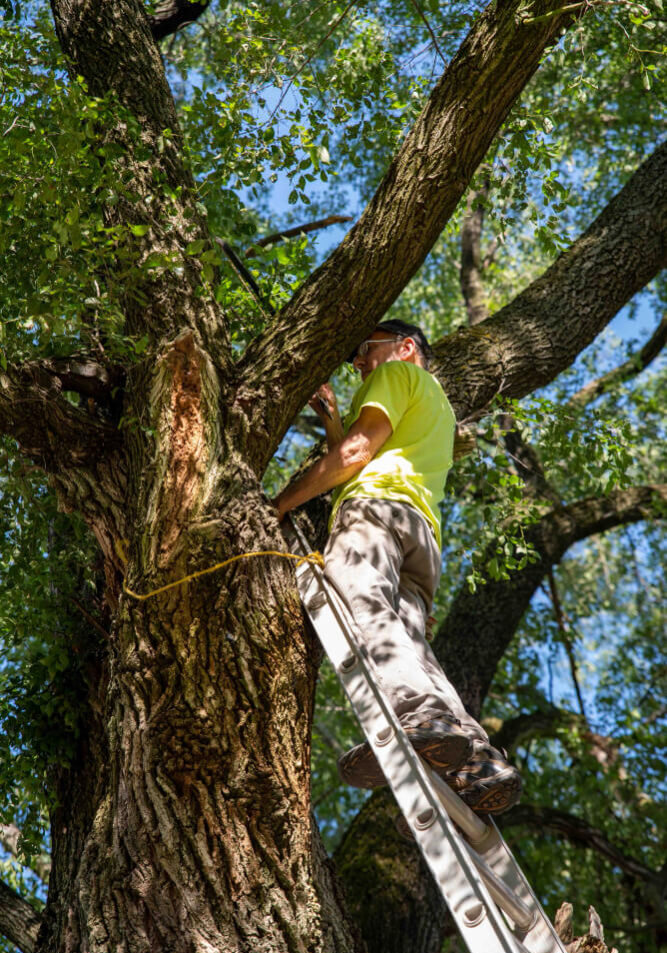
The value of professional judgment
People sometimes ask what they are really paying for during a Certified Arborist Consultation. The visible part of the visit may seem simple: looking at a tree, asking questions, walking the site. But the value sits in interpretation. Trained arborists are not only identifying defects. They are sorting significance.
That distinction matters because many trees have some imperfection. Mature trees especially do not age into sterile textbook form. They carry old pruning wounds, asymmetry, deadwood, storm history, and growth responses to space and light. A less experienced eye may either dismiss too much or overreact to everything. Professional judgment is what keeps the recommendation proportionate.
It also helps when the best answer is not the most obvious one. Sometimes a client requests Tree Removal Services and gets a pruning plan instead. Sometimes they ask for “just a trim,” and the assessment leads to removal because pruning would not solve the actual risk. Both outcomes can be right. The consistency comes from the process, not from a predetermined menu of services.
Good decisions are rarely single-service decisions
One of the most practical realities in risk reduction is that the final plan often combines services. A dangerous limb may be pruned now, a support system may be considered for a secondary stem, access under the crown may be changed, and the tree may be scheduled for reassessment after the next storm season. Another tree may be removed, the stump ground, and replacement planting discussed later. Real properties are rarely solved with one sentence or one cut.
That matters for budgeting too. Owners sometimes assume the cheapest immediate action is the most economical. It often is not. Repeated reactive callouts, poor pruning that triggers regrowth problems, or delayed removal after a known issue can cost more than a thoughtful first decision. At the same time, a recommendation should never be larger than the evidence supports. Good arboriculture balances restraint with action.
What property owners should expect from the process
A sound tree risk conversation should leave the owner with clarity, not just a price. They should understand what the concern is, why it matters, what the likely management options are, and where uncertainty remains. Not every answer can be absolute, because living trees and weather do not offer guarantees. But uncertainty should be explained honestly, not hidden behind vague language.
Owners should also expect recommendations that fit use patterns on their property. A tree over a picnic area, parking space, front walk, or commercial entry deserves a different level of scrutiny than one beyond regular occupancy. If that difference is not part of the discussion, the assessment is probably too superficial.
The best dangerous tree decisions FireSmart fuel reduction are rarely dramatic. They are methodical, documented in plain language, and tied to practical next steps. Sometimes those steps lead to Tree Pruning & Crown Shaping. Sometimes they lead to Tree Cable and Bracing. Sometimes they call for Emergency Tree Services right away. And sometimes, after a careful look, the correct decision is to leave the tree alone and keep watching.
That last outcome can surprise people, but it is one of the clearest signs that the assessment was professional. The goal is not to remove uncertainty from nature. It is to manage risk thoughtfully, reduce the chance of avoidable harm, and preserve trees where that can be done responsibly. When the process is systematic, dangerous tree decisions stop being driven by fear or habit and start being guided by evidence, site context, and informed judgment.
Name: Ace Tree Services Ltd.
Address: 4656 Wallace Hill Road, Kelowna, BC
Phone: 250-212-9593
Website: https://acetree.ca/
Hours:
Monday: 7:00 AM–5:00 PM
Tuesday: 7:00 AM–5:00 PM
Wednesday: 7:00 AM–5:00 PM
Thursday: 7:00 AM–5:00 PM
Friday: 7:00 AM–5:00 PM
Saturday: 7:00 AM–5:00 PM
Sunday: Closed
Emergency tree services: 24/7 emergency service is listed.
Open-location code / Plus code: RHF8+8G Kelowna, British Columbia, Canada
Map/listing URL: https://www.google.com/maps/place/Ace+Tree+Services+Ltd./@49.8232606,-119.4337283,563m/data=!3m1!1e3!4m6!3m5!1s0x537d8b1d074815c5:0x450b88afa7a41435!8m2!3d49.8232606!4d-119.4337283!16s%2Fg%2F11ydkpnh22
Embed iframe:
Socials: https://www.facebook.com/people/Ace-Tree-Services/61585901931447/
https://m.yelp.com/biz/ace-tree-services-kelowna
Ace Tree Services Ltd. provides professional tree service for residential, commercial, and municipal customers in Kelowna and across the Okanagan Valley.
The company’s listed services include tree removal, stump removal and grinding, tree pruning and crown shaping, emergency tree services, certified arborist consultation, dangerous tree assessment, tree cable and bracing, and wildfire mitigation.
Ace Tree Services works with homeowners, businesses, property managers, and public-sector clients that need safe, practical tree care in the Kelowna area.
The official site highlights ISA-certified arborists, insurance, and experience handling both routine and complex tree service situations.
Customers can contact Ace Tree Services for tree care planning, hazard concerns, emergency tree cleanup, pruning needs, stump grinding, or advice about trees near homes, fences, driveways, and landscaping.
Ace Tree Services lists regular work hours from 7:00 AM to 5:00 PM Monday through Friday, with 24/7 emergency tree service available for urgent situations.
For tree service in Kelowna, call 250-212-9593 or visit https://acetree.ca/
The public map listing places Ace Tree Services Ltd. in Kelowna and can help customers find directions to the Wallace Hill Road area.
Popular Questions About Ace Tree Services Ltd.
What services does Ace Tree Services Ltd. provide?
Ace Tree Services Ltd. provides tree removal, stump removal and grinding, tree pruning and crown shaping, emergency tree services, certified arborist consultation, dangerous tree assessment and removal, tree cable and bracing, and wildfire mitigation.
Where is Ace Tree Services Ltd. located?
The official website lists Ace Tree Services Ltd. at 4656 Wallace Hill Road, Kelowna, BC.
What areas does Ace Tree Services Ltd. serve?
The official website describes Ace Tree Services as located in Kelowna and servicing the Okanagan.
What phone number should customers call?
Customers can call Ace Tree Services Ltd. at 250-212-9593.
What are Ace Tree Services Ltd.’s regular hours?
The official website lists work hours as 7:00 AM to 5:00 PM, Monday through Friday. Saturday and Sunday regular hours are not listed and should be confirmed directly.
Does Ace Tree Services Ltd. offer emergency tree service?
Yes. The official website lists 24/7 emergency services for urgent tree situations, including emergency tree removal, dangerous tree assessment, stabilization, and limb or branch cleanup.
Does Ace Tree Services Ltd. have certified arborists?
Yes. The official website states that Ace Tree Services has ISA-certified arborists.
Can Ace Tree Services Ltd. help with wildfire mitigation?
Yes. Wildfire mitigation is listed as one of the company’s tree services.
How do I contact Ace Tree Services Ltd.?
Call 250-212-9593 or visit https://acetree.ca/.
Landmarks Near Kelowna, BC
Wallace Hill Road: A local Kelowna road near the address listed for Ace Tree Services Ltd.
Okanagan Lake: A major Kelowna landmark near residential, commercial, and waterfront properties that may need tree pruning, removal, or hazard assessment.
Downtown Kelowna: A central area with homes, offices, rental properties, restaurants, and commercial sites that may need professional tree care.
Mission / Lower Mission: A well-known Kelowna area with mature landscaping, residential properties, and lake-adjacent homes.
South East Kelowna: A rural and residential area with larger properties, orchards, and tree-care needs that can include pruning, removals, and wildfire mitigation.
Crawford: A residential area near the southeast side of Kelowna where homeowners may need tree trimming, hazard assessment, and stump grinding.
Kettle Valley: A hillside residential neighborhood where tree condition, slope, wind exposure, and defensible-space planning can matter for property owners.
Myra-Bellevue Provincial Park: A major outdoor landmark near southeast Kelowna and a useful point of orientation for nearby properties.
Gallagher’s Canyon: A residential and golf community near southeast Kelowna where tree maintenance and wildfire-conscious vegetation management can be practical concerns.
Orchard Park Shopping Centre: A major central Kelowna retail landmark and reference point for customers traveling across the city.
Highway 97: A major Kelowna corridor connecting neighborhoods, commercial properties, and service routes throughout the region.
Kelowna City Park: A recognizable central landmark near downtown neighborhoods and lakefront properties.
Glenmore: A Kelowna neighborhood with residential and commercial properties that may need pruning, storm cleanup, and general tree care.
Rutland: A large residential and commercial area where customers may need tree removal, pruning, stump grinding, or arborist consultation.
Black Mountain: A hillside community where slope, wind, wildfire exposure, and access can influence tree service planning.
For tree service near these Kelowna landmarks, contact Ace Tree Services Ltd. at 250-212-9593 or visit https://acetree.ca/