Wildfire Mitigation Tree Services and Defensible Space Planning
Wildfire does not behave like a simple wall of flame. It moves through grass, ladder fuels, brush, fence lines, mulch beds, decks, wood piles, and then into the canopy if the conditions line up. Trees are often blamed first, but in practice they are only one part of the fuel picture. I have seen properties with beautiful mature oaks survive because the understory was managed well, and I have seen newer landscapes fail because a row of neglected junipers sat tight against a porch.
That distinction matters. Good wildfire mitigation is not indiscriminate clearing. It is thoughtful fuel management, paired with an honest understanding of how fire approaches a structure. The best plans preserve healthy, valuable trees where possible, reduce ember exposure, break up continuous fuels, and make the site safer for both residents and firefighters. Done well, defensible space planning improves fire resilience without stripping a property bare.
For homeowners, property managers, and builders working in fire prone regions, that usually means bringing together several services that are often treated separately: Tree Removal Services where removal is justified, Stump Removal & Grinding where old stumps create fuel and regrowth issues, Tree Pruning & Crown Shaping to interrupt fire pathways, Emergency Tree Services after wind or storm damage, and Certified Arborist Consultation to decide what should stay and what should go. On more technical sites, Dangerous Tree Assessment and Removal and Tree Cable and Bracing may also have a place.
Defensible space starts with fire behavior, not a chainsaw
A common mistake is to think defensible space is about a fixed amount of clearing in every direction. In reality, slope, species, wind exposure, aspect, neighboring vegetation, and building materials all change the calculation. Fire runs faster uphill. Dense conifers behave differently from irrigated deciduous trees. A house with enclosed soffits and a Class A roof has a different risk profile than one with open eaves and dry pine needles in every corner.
When I walk a property for Wildfire Mitigation Tree Services, I am not just looking at tree count. I am looking for fuel continuity. Can a ground fire climb into shrubs, then low limbs, then crowns? Are there tree canopies touching each other over the driveway, creating a heat tunnel? Does the lot line have a neglected thicket that will send ember storms straight toward the house? Is there dead wood suspended in the mid canopy that will torch under heat?
A mature tree is not automatically a hazard. A healthy, well spaced deciduous tree with a high canopy and irrigated root zone can slow wind near a structure, shade combustible surfaces, and contribute less intense fuel than a dense stand of resinous evergreens packed close together. The goal is to interrupt fire spread, not erase the landscape.
What a real site assessment looks like
A serious assessment usually starts at the structure and works outward. That surprises some people, because they expect attention to begin at the property edge. But most homes are lost from embers and radiant heat in the immediate zone around the building. Needles in gutters, leaves under decks, bark mulch against siding, and shrubs tucked under windows are often more urgent than a healthy tree forty feet away.
From there, the assessment expands into zones, though the exact distances vary by local guidance and topography. The first area calls for the strictest housekeeping and fuel reduction. The middle area often needs strategic pruning, spacing, and selective removal. The outer area is where larger thinning decisions come into play, especially on rural acreage.
A Certified Arborist Consultation adds discipline to this process. Species identification matters. Structural defects matter. So does tree health. A codominant stem with included bark over a roof is one issue. A declining pine with beetle damage near the access drive is another. A live oak with strong branch architecture may need modest canopy work, while a dead cedar leaning toward a propane tank may require immediate Dangerous Tree Assessment and Removal.
Homeowners sometimes ask for a simple yes or no answer about every tree. In the field, it is rarely that tidy. I often mark trees in three categories: retain, prune, or remove. That middle category is where most of the value lies. Proper Tree Pruning & Crown Shaping can keep a tree useful and attractive while materially improving fire safety.
Pruning for wildfire resilience is different from ornamental trimming
There is a big difference between pruning for appearance and pruning for fire mitigation. Ornamental work may focus on symmetry, view corridors, or canopy shape. Wildfire oriented pruning focuses on vertical and horizontal separation, deadwood reduction, and branch architecture that limits flame spread.
Lower limbs are an obvious target, but they should not be stripped blindly. Over-limbing a tree can stress it, expose bark to sun injury, and trigger weak regrowth. In many species, especially those already dealing with drought, poor cuts create long term problems. The better approach is measured canopy raising based on species tolerance, age, health, and the fuels beneath the tree.
Deadwood removal is usually one of the highest value tasks on a fire prone property. Suspended dead branches ignite readily, shed embers, and increase spotting potential. Crown cleaning also improves visibility into the canopy, which helps with later inspections. I have seen properties where removing dead hangers and thinning crowded limbs changed the fire behavior potential more than taking out a few random trees ever would.
Crown spacing is another area where judgment matters. The right distance between canopies depends on slope and species. On a flat lot with broadleaf trees, moderate separation may be sufficient. On steep ground with dense conifers, you may need far more room to prevent crown fire spread. That is why cookie cutter prescriptions often disappoint. Fire does not read generic plans.
Removal is sometimes necessary, but it should be selective
Tree Removal Services play a central role in wildfire mitigation, but removal should answer a specific risk. Trees too close to the house, trees with heavy dead tops, highly flammable species massed beside structures, and unstable trees over evacuation routes often make the list. So do specimens with severe decay, root failure, or chronic decline that cannot be corrected through pruning.
Selective removal can also improve the health of the stand that remains. Overcrowded trees compete for water, especially during drought years. Thinning can increase vigor in retained trees, which helps them resist insects, disease, and heat stress. A healthier tree with a full moisture balance is usually less vulnerable than one struggling in an overstocked grove.
That said, excessive clearing can backfire. Remove too much canopy and you may increase surface temperatures, dry out fine fuels, and encourage flashy weed growth. In some landscapes, opening the site too aggressively creates more wind penetration, which can intensify fire behavior. This is where experience matters. The best mitigation crews know when a tree is a problem and when the real problem is the fuel around it.
A practical removal plan often prioritizes the following:
- Dead or dying trees that can torch or fail near structures, access roads, or utility corridors.
- Trees creating ladder fuels directly above dense shrubs or brush.
- Highly flammable species planted too close to roofs, decks, vents, or propane storage.
- Defective trees with split stems, root instability, or advanced decay.
- Crowded trees whose removal improves spacing and the health of retained specimens.
Stumps are not an afterthought
After tree removal, many owners stop at the cut stump. In wildfire planning, that can be shortsighted. Stump Removal & Grinding may be important where stumps are close to structures, where they obstruct maintenance, or where they encourage sprouting and dense regrowth. Some species respond aggressively after cutting. What starts as one removed tree can become a thicket of shoots if the site is left unmanaged.
Grinding also helps when you need to regrade, improve access, or convert an area from neglected fuel to a maintained low fuel zone. It is not always required, especially on large rural tracts, but around homes, driveways, and outbuildings it often makes sense. The decision depends on budget, species, and how the ground will be used afterward.
There is a trade off, though. Grinding creates chips, and chips are still organic material. If the grindings are left deep against the house, you have simply changed the shape of the fuel. Good crews either remove excess material or spread it appropriately well away from ignition vulnerable areas.
The hidden role of emergency work
Emergency Tree Services are usually associated with storm cleanup, but they matter in wildfire planning too. A wind event that snaps limbs, partially uproots trees, or leaves hangers in the canopy can change a property’s fire risk overnight. The same is true after a small brush fire that scorches root zones and weakens stems without causing immediate failure.
I have inspected properties after summer windstorms where one broken top hung fifty feet up in a ponderosa pine over a driveway. To the homeowner it looked like storm debris. To a firefighter trying to enter the site during a fast moving fire, it was a hazard and an access problem. Emergency response is not just about making a yard look tidy. It is about restoring safe egress, removing unstable fuel, and preventing delayed failures.
Post fire work also deserves caution. Trees can look green and stable right after heat exposure, then decline over weeks or months. Cambium injury, root damage, and soil heating do not always announce themselves on day one. If a fire has been anywhere near the property, a follow up inspection is worth the cost.
When support systems make sense, and when they do not
Tree Cable and Bracing can be useful where a high value tree has a correctable structural issue but removal would be excessive. This is most common with historic specimens, large shade trees near homes, or trees that contribute substantially to slope stability or site value. A supplemental support system may reduce failure risk while preserving canopy cover.
Still, cabling is not a wildfire cure. It does not reduce flammability, and it should never be used to justify keeping a severely compromised tree in the wrong location. Support systems are maintenance tools, not miracles. They work best when paired with pruning, ongoing inspection, and a realistic understanding of the tree’s condition.
I have seen clients push for cabling because they want to save every mature tree near the house. Sometimes that is defensible. Sometimes it is not. If a tree has extensive decay at the base, heavy dieback, and sits ten feet from a wood shake roof, support hardware does not solve the real problem. A frank Dangerous Tree Assessment and Removal conversation is better than false reassurance.
Species choice changes everything
Not all trees burn the same way. Broadly speaking, moisture content, resin levels, bark characteristics, canopy density, and litter production affect how a species behaves in fire conditions. Dense conifers with retained dead branches and needle accumulation often present a very different risk than well maintained deciduous trees with cleaner trunks and moister leaves.
But broad categories only take you so far. A neglected maple with dead interior wood over a cedar fence can still be a problem. A carefully maintained pine with proper spacing and clean understory may be entirely compatible with a good defensible space plan. Site management often matters as much as species selection.
For new plantings, it helps to think ten years ahead. Homeowners often install trees too close to structures because they like the immediate look. A small evergreen that feels harmless at planting can become a major ladder fuel beside the eaves. Good planning respects mature size, expected litter, maintenance needs, and how the plant will fit into the larger fuel mosaic.
Access, visibility, and firefighter safety
A wildfire plan that ignores access is incomplete. Fire crews need room to enter, turn around, stage equipment, and leave if conditions shift. Trees leaning over a narrow driveway, low branches scraping apparatus, and dense roadside vegetation can all delay response when minutes matter.
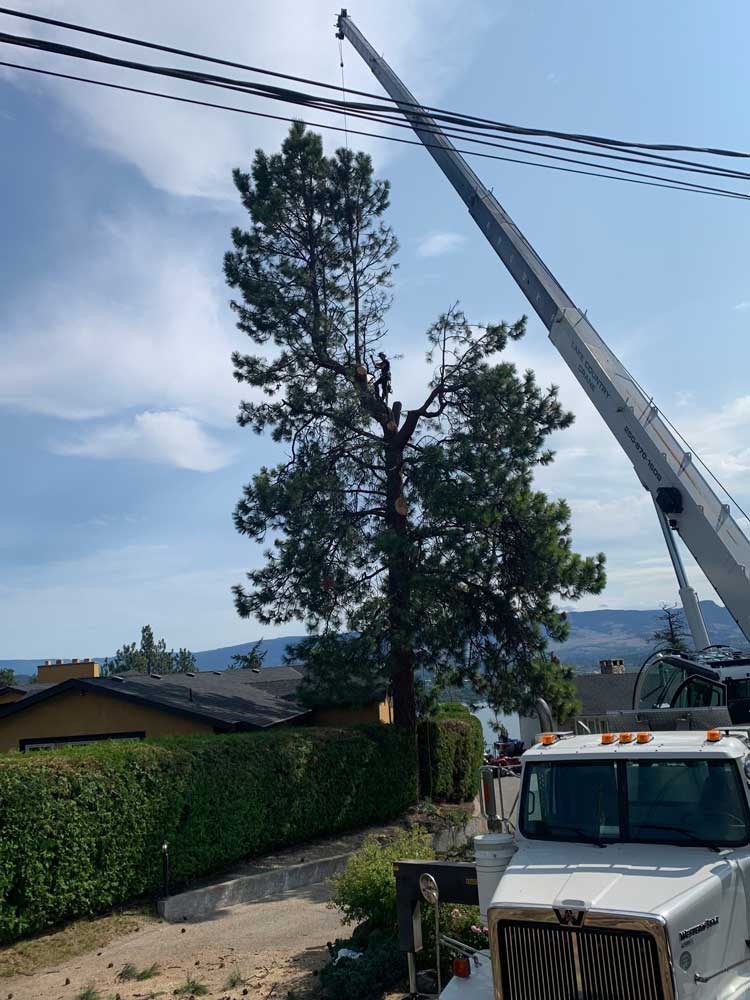
Defensible space planning should account for vertical clearance and roadside fuel management. This does not mean clear cutting every drive. It means creating a corridor that vehicles can actually use under stress, often with a buffer that reduces heat and flame impingement. On rural properties with one way in and out, that corridor may be one of the most important mitigation investments on site.
Visibility is also part of safety. If the house number is hidden behind overgrown landscaping, if the hydrant or cistern is obscured, or if gates are blocked by limb growth, crews lose time. Those details sound small until smoke is in the air.
What homeowners can handle, and what belongs to specialists
Some defensible space tasks are straightforward. Clearing needles from roofs and gutters, moving firewood away from structures, and removing dead annual growth from ornamental beds are well within the ability of many property owners. The danger comes when simple maintenance slides into technical tree work.
Climbing, rigging, felling near structures, and diagnosing defects require training and equipment. Improper cuts can make a tree more dangerous. Poor felling decisions can take out fences, roofs, vehicles, and power lines. The cost of hiring qualified help is usually lower than the cost of fixing a preventable mistake.
If you are deciding where to start, focus first on the items that most directly affect structure ignition and safe access:
- Remove combustible debris from roofs, gutters, decks, and the first zone around the home.
- Prune deadwood and reduce ladder fuels beneath retained trees.
- Address hazardous trees over the house, driveway, and evacuation routes.
- Thin or remove vegetation that creates continuous fuel beds beside structures.
- Schedule a professional inspection before fire season, especially after drought, storms, or nearby fire activity.
The value of a professional eye
A Certified Arborist Consultation pays for itself when it prevents the wrong work. I have walked properties where the owner planned to remove the biggest trees because they looked intimidating, while ignoring the dense hedge touching the siding and the dead saplings under the pines. The large trees were not the immediate issue. The fine fuels and lower ladder fuels were.
Professional inspections also help balance fire safety with tree health, property fruit tree pruning value, and local rules. Many jurisdictions regulate removals, especially for heritage trees, riparian buffers, or slopes. An arborist who understands both wildfire risk and tree biology can help navigate those constraints while building a plan that actually works.
The best consultations are practical. They should tell you what needs attention now, what can wait, and what should simply be monitored. They should explain the reasoning, not just hand over a marked map. If every recommendation is a removal, be skeptical. If nothing needs work on an obviously overgrown property, be skeptical for the opposite reason.
Defensible space is maintenance, not a one time project
This is the part many people underestimate. A property can be in excellent shape in May and noticeably riskier by late August, especially after heat, wind, and drought. Trees drop limbs. Grasses cure out. Sprouts fill gaps. Mulch dries. A single season of neglect can undo expensive cleanup work.
Wildfire Mitigation Tree Services should be viewed as an ongoing program. For some sites, that means annual pruning and inspection. For others, especially larger wooded parcels, it may mean a rotating schedule of thinning, brush control, access maintenance, and post storm response. The right rhythm depends on climate, vegetation type, and how intensively the landscape is managed.
Homeowners who keep up with the work usually spend less over time. Small pruning jobs stay small. Declining trees are caught before they become emergencies. Access routes remain usable. The property never slides so far behind that a major restoration effort is needed.
That is the real promise of good wildfire planning. It is not perfect safety, because no honest professional can guarantee that in a severe fire event. It is better odds. Better structure survivability. Better access for crews. Better decisions about which trees to preserve and which to remove. And for the people who live there, it is the confidence that the landscape has been managed with purpose rather than panic.
Name: Ace Tree Services Ltd.
Address: 4656 Wallace Hill Rd, Kelowna, BC V1W 4C2, Canada
Phone: 250-212-9593
Website: https://acetree.ca/
Email: [email protected]
Hours:
Sunday: Closed
Monday: 7:00 AM–5:00 PM
Tuesday: 7:00 AM–5:00 PM
Wednesday: 7:00 AM–5:00 PM
Thursday: 7:00 AM–5:00 PM
Friday: 7:00 AM–5:00 PM
Saturday: 7:00 AM–5:00 PM
Time zone: Pacific Time
Open-location code / Plus code: RHF8+8G Kelowna, British Columbia, Canada
Map/listing URL: https://www.google.com/maps/search/?api=1&query=Google&query_place_id=ChIJxRVIBx2LfVMRNRSkp6-IC0U
Embed iframe:
Socials:
https://www.facebook.com/p/Ace-Tree-Services-61585901931447/
Ace Tree Services Ltd. provides professional tree care from its Kelowna location on Wallace Hill Road.
The official website lists tree removal, stump removal and grinding, tree pruning and crown shaping, emergency tree services, certified arborist consultation, dangerous tree assessment and removal, tree cabling and bracing, and wildfire mitigation.
Ace Tree Services serves homeowners, businesses, and property owners in Kelowna and throughout the Okanagan Valley.
The company’s official site highlights ISA Certified Arborist support, local Okanagan experience, and fully insured tree service work.
Customers can contact Ace Tree Services for planned tree maintenance, high-risk removals, storm-related tree concerns, pruning, stump grinding, and arborist consultation needs.
The supplied public listing address is 4656 Wallace Hill Rd, Kelowna, BC V1W 4C2, near rural and residential service areas in southeast Kelowna.
For tree services in Kelowna and the Okanagan, call 250-212-9593, email [email protected], or visit https://acetree.ca/
The public map listing uses plus code RHF8+8G Kelowna, British Columbia, Canada and can help customers find Ace Tree Services Ltd. near Wallace Hill Road.
Popular Questions About Ace Tree Services Ltd.
What does Ace Tree Services Ltd. do?
Ace Tree Services Ltd. provides tree removal, stump removal and grinding, tree pruning and crown shaping, emergency tree service, certified arborist consultation, dangerous tree assessment and removal, tree cabling and bracing, and wildfire mitigation.
Where is Ace Tree Services Ltd. located?
Ace Tree Services Ltd. is listed at 4656 Wallace Hill Rd, Kelowna, BC V1W 4C2, Canada.
What phone number should customers call?
Customers can call Ace Tree Services Ltd. at 250-212-9593.
What is the email address for Ace Tree Services Ltd.?
The supplied email address is [email protected].
What are Ace Tree Services Ltd.’s hours?
The supplied listing hours show Monday through Saturday from 7:00 AM to 5:00 PM, with Sunday closed, Pacific Time. The official website lists 7:00 AM to 5:00 PM, Monday through Friday, so customers should confirm Saturday availability before booking.
Does Ace Tree Services Ltd. provide emergency tree service?
Yes. The official website lists emergency tree services, including emergency tree removal, dangerous tree assessment, emergency stabilization, and limb or branch cleanup.
Does Ace Tree Services Ltd. offer arborist consultations?
Yes. The official services page lists certified arborist consultation as one of the company’s Okanagan tree services.
Does Ace Tree Services Ltd. provide stump grinding?
Yes. The official services page lists stump removal and grinding as a service.
What areas does Ace Tree Services Ltd. serve?
The official website states that Ace Tree Services serves Kelowna and the Okanagan Valley.
How do I contact Ace Tree Services Ltd.?
Call 250-212-9593, email [email protected], visit https://acetree.ca/, or use the listed social profile: Facebook.
Landmarks Near Kelowna, BC
Wallace Hill Road: The road listed for Ace Tree Services Ltd. and a practical reference point for the company’s Kelowna location.
East Kelowna: A nearby rural and residential area where tree maintenance, pruning, removals, and wildfire mitigation can be important for property owners.
Myra-Bellevue Provincial Park: A major outdoor landmark southeast of Kelowna and a useful reference for the surrounding hillside and forested areas.
Gallagher’s Canyon: A nearby Kelowna community with residential properties, mature trees, and landscape maintenance needs.
Kettle Valley: A southeast Kelowna neighborhood with homes, parks, and landscaped properties.
Mission Creek Greenway: A well-known natural corridor in Kelowna and a local reference point for tree-lined recreation areas.
Orchard Park Shopping Centre: A major Kelowna retail landmark and citywide reference point.
Downtown Kelowna: A central business and residential district within Ace Tree Services’ broader Kelowna service area.
Okanagan Lake: A major regional landmark running through Kelowna and the surrounding Okanagan Valley.
Mission Creek Regional Park: A recognizable Kelowna park and natural landmark with extensive trees and trails.
Rutland: A large Kelowna community with residential and commercial properties that may need tree service support.
Glenmore: A Kelowna neighborhood with homes, parks, and established trees.
Lower Mission: A residential and lake-adjacent Kelowna area where pruning, tree health, and property safety can matter for homeowners.
Kelowna International Airport: A major transportation landmark north of central Kelowna.
West Kelowna: A nearby Okanagan community across the lake and a practical regional service reference.
For tree removal, stump grinding, pruning, crown shaping, emergency tree service, arborist consultation, dangerous tree assessment, cabling and bracing, or wildfire mitigation near these Kelowna and Okanagan landmarks, contact Ace Tree Services Ltd. at 250-212-9593, email [email protected], or visit https://acetree.ca/